What is the range of human hearing?
The average human hearing range typically spans from 20 Hz to 20,000 Hz, encompassing the sounds most people can perceive. This range allows humans to detect everyday noises, speech, and music, forming the basis of our auditory experience.
What frequencies can humans hear?
The human hearing frequency range generally extends from 20 Hz to 20,000 Hz, encompassing the full spectrum of sounds humans can detect.
Low frequencies, from 20 Hz to around 250 Hz, are perceived as deep bass tones, while mid-range frequencies, roughly 250 Hz to 4,000 Hz, cover most speech sounds. High frequencies, from 4,000 Hz up to 20,000 Hz, include higher-pitched noises such as birdsong or certain musical instruments. Sensitivity within this range is not uniform—humans hear some frequencies more clearly than others, and the ability to detect high frequencies typically declines with age, a condition known as presbycusis.
Range of human hearing in hz
- The average human hearing range extends from 20 Hz to 20,000 Hz.
- Low frequencies (20–250 Hz) are experienced as deep bass tones.
- Mid-range frequencies (250–4,000 Hz) cover most speech sounds and common environmental noises.
- High frequencies (4,000–20,000 Hz) include higher-pitched sounds like birdsong or musical harmonics.
Normal human hearing range in db
- The typical human hearing range in decibels spans from 0 dB to around 120–130 dB.
- 0 dB represents the softest sound the average person can detect.
- 60 dB is comparable to normal conversation, while 85 dB can cause hearing damage with prolonged exposure.
- Sounds above 120 dB, such as a jet engine nearby, are painfully loud and can cause immediate hearing damage.
What is the difference between hertz and decibels?
Hertz (Hz) and decibels (dB) measure different aspects of sound.
Hertz refers to the frequency of a sound, indicating how many vibrations per second occur, which determines the pitch—low Hz sounds are deep, while high Hz sounds are high-pitched. Decibels, on the other hand, measure the intensity or loudness of a sound, showing how strong the sound waves are.
In simple terms, Hz tells us “how high or low a sound is,” while dB tells us “how loud it is.” Both are essential for understanding human hearing, as they define the range of sounds we can perceive and how intensely we experience them.
Decibel scale examples
The decibel scale measures sound intensity, helping to understand how loud different sounds are to the human ear:
- 0 dB – Faintest sound the average human can hear
- 30 dB – Quiet library or whisper
- 60 dB – Normal conversation
- 85 dB – Busy traffic or vacuum cleaner (prolonged exposure may cause hearing damage)
- 100 dB – Motorcycle or loud concert (short exposure can be harmful)
- 120 dB – Jet engine at close range (painfully loud, immediate risk of hearing loss)

What are the highest and lowest frequencies?
The highest and lowest frequencies a human can hear define the extremes of the auditory spectrum. On the low end, most people can detect sounds as deep as 20 Hz, which are felt as vibrations rather than heard as distinct tones. On the high end, the upper limit is typically around 20,000 Hz (20 kHz), producing very high-pitched sounds like a whistle or certain musical overtones.
These limits vary with age, genetics, and environmental factors, with the ability to hear higher frequencies generally decreasing over time. Understanding these extremes helps illustrate the full scope of the human hearing range and highlights why protecting our ears from loud noise is essential.
Factors affecting hearing range
- Age: Hearing, especially for high-frequency sounds, naturally declines with age (presbycusis).
- Noise exposure: Prolonged or repeated exposure to loud sounds—like music, traffic, or industrial noise—can damage inner ear hair cells.
- Genetics: Some people are genetically more prone to hearing loss or reduced sensitivity to certain frequencies.
- Health conditions: Ear infections, diabetes, cardiovascular problems, and other medical issues can impair hearing.
- Medications: Certain drugs, known as ototoxic medications, can negatively affect hearing.
- Lifestyle & protection: Regular use of ear protection in noisy environments and good ear care can help preserve hearing over time.
Human hearing range by age
As we become older, the frequency range of human hearing gradually narrows, especially for higher-pitched sounds. Young children and teenagers can often hear frequencies up to 20,000 Hz, but this ability declines with age. By adulthood, the upper limit typically falls to around 15,000–17,000 Hz, and in older adults, it may drop further to 8,000–12,000 Hz. This change can affect how we perceive everyday sounds, including conversations, alarms, and music, making hearing protection and regular check-ups increasingly important as we age.
How to assess hearing human range
- Hearing tests and audiograms
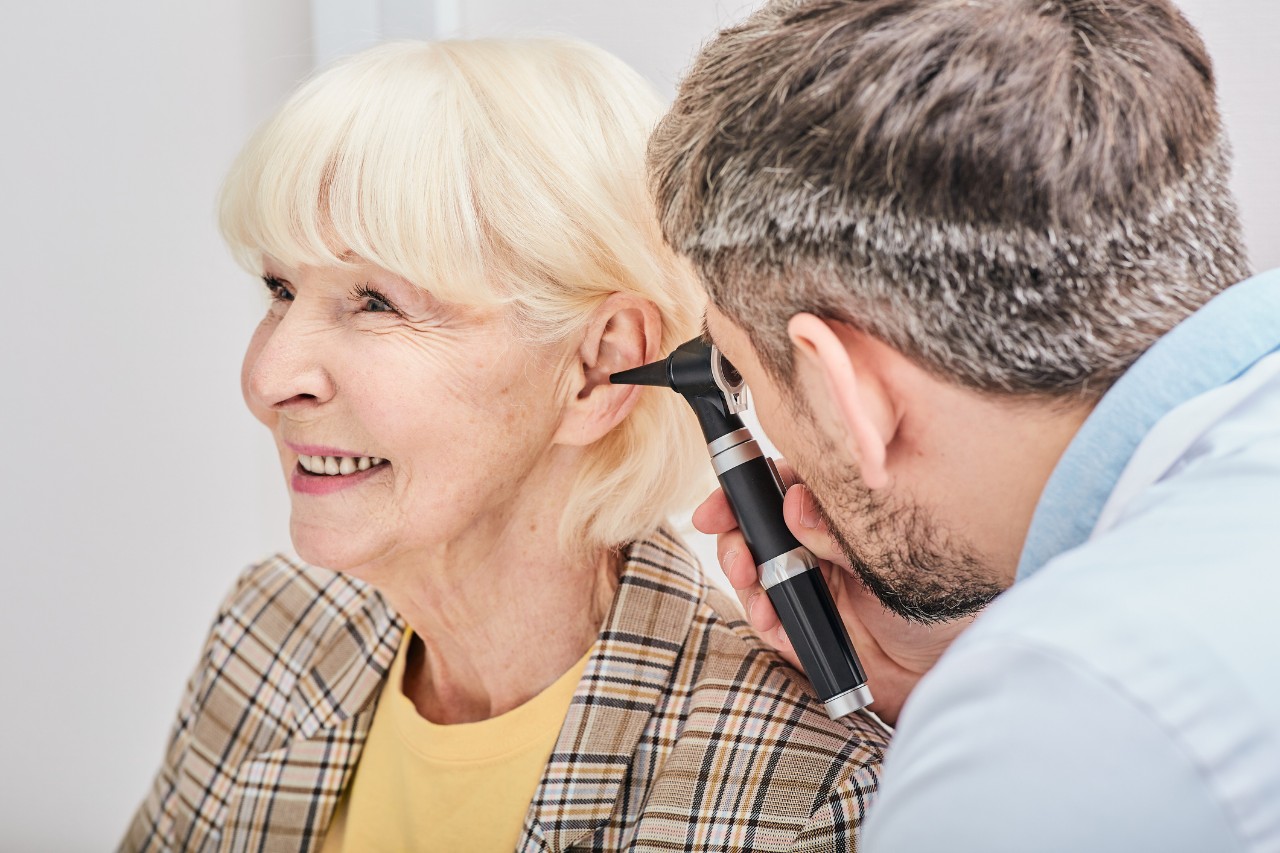
Assessing the human hearing range typically begins with a hearing test conducted by an audiologist. In pure-tone audiometry, sounds of different frequencies (measured in hertz) and volumes (measured in decibels) are played through headphones, and the person indicates when they can hear each tone. This test maps the quietest sounds detectable across the frequency spectrum.
- Speech and real-world assessments
In addition to tone-based tests, speech-in-noise assessments measure how well a person can understand speech in environments with background noise. These tests provide a more practical view of hearing ability in daily situations, where multiple sounds compete for attention.
- Self-assessment and regular check-ups
For preliminary evaluation, online hearing tests can offer a rough estimate of the hearing range. However, professional assessment remains crucial, as regular hearing evaluations help track changes in the human hearing range, detect early signs of hearing loss, and guide preventive or corrective measures.
Protecting and improving hearing
Protecting and improving hearing is essential to maintain the full human hearing range throughout life. One of the most effective strategies is to avoid prolonged exposure to loud sounds, such as concerts, heavy traffic, or personal audio devices at high volumes. Using ear protection, like earplugs or noise-canceling headphones, can significantly reduce the risk of hearing damage. Maintaining overall health through regular exercise, a balanced diet, and controlling conditions like high blood pressure or diabetes also supports auditory function. Additionally, hearing exercises and auditory training can help improve sound discrimination and comprehension, particularly for older adults. Regular hearing check-ups allow early detection of issues and timely intervention with hearing aids or other technologies when needed.
FAQs about human hearing range
Is hearing 18,000 Hz good?
Can a human hear 20 Hz?
How much Hz can a 70 year old hear?
What is an unsafe hearing level?