What are ear seeds?
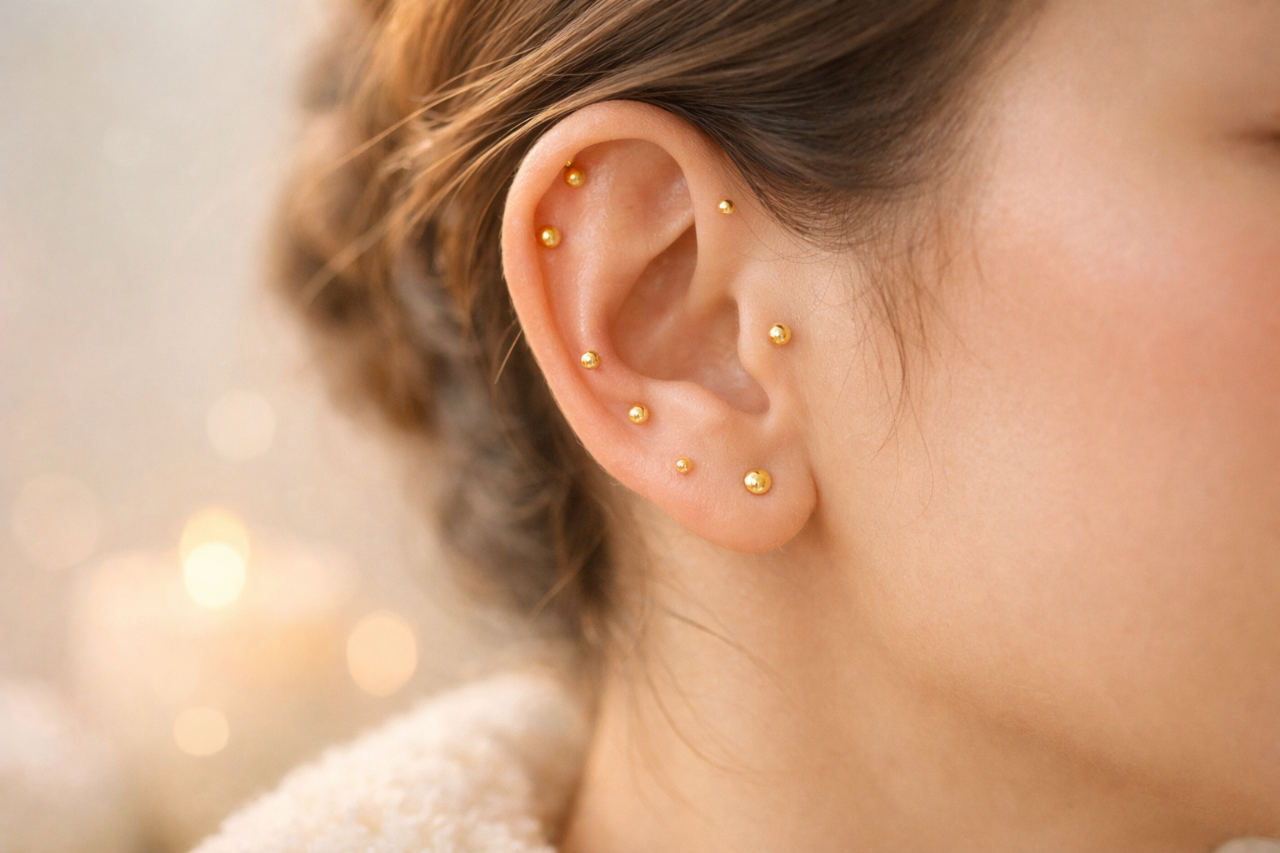
Ear seeds are tiny beads or plant-based seeds that are applied to specific points on the outer ear to provide gentle, continuous stimulation. This technique is part of auricular therapy, a practice in which the ear is treated as a microsystem reflecting the rest of the body. The method has its origins in Traditional Chinese Medicine, where ear stimulation has been used for centuries to support overall wellness. Similar techniques are also found in Korean traditional medicine, reflecting the broader East Asian approach to ear-based therapies. By placing chinese, korean or other small seeds on targeted points, the method can support relaxation, reduce tension, and promote general well-being. Ear seeds can be used both in professional settings and at home, making them a convenient, non-invasive wellness option.
What is and how does ear seeding work?
Ear seeding is a form of auricular therapy in which small seeds, beads, or crystals are applied to specific points on the outer ear to stimulate the body’s natural response to pressure. These points correspond to different areas and systems of the body, creating a microsystem in which the ear reflects overall health and wellness. Ear seed therapy works by activating nerve endings in the ear that communicate with the nervous system, promoting relaxation and focus.
What are ear seeds used for?
Ear seeds for weight loss
Ear seeds for anxiety
Ear seeds for migraines and headaches
Ear seeds for stress and pain relief
Ear seeds for fertility
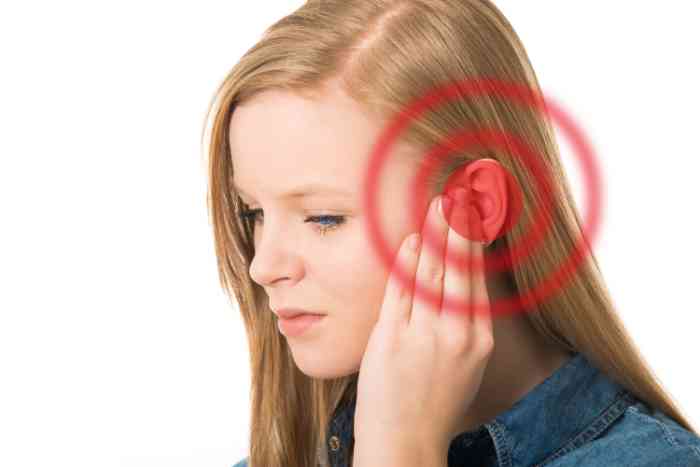
Ear seeds for tinnitus
Ears seeds for sleep problems
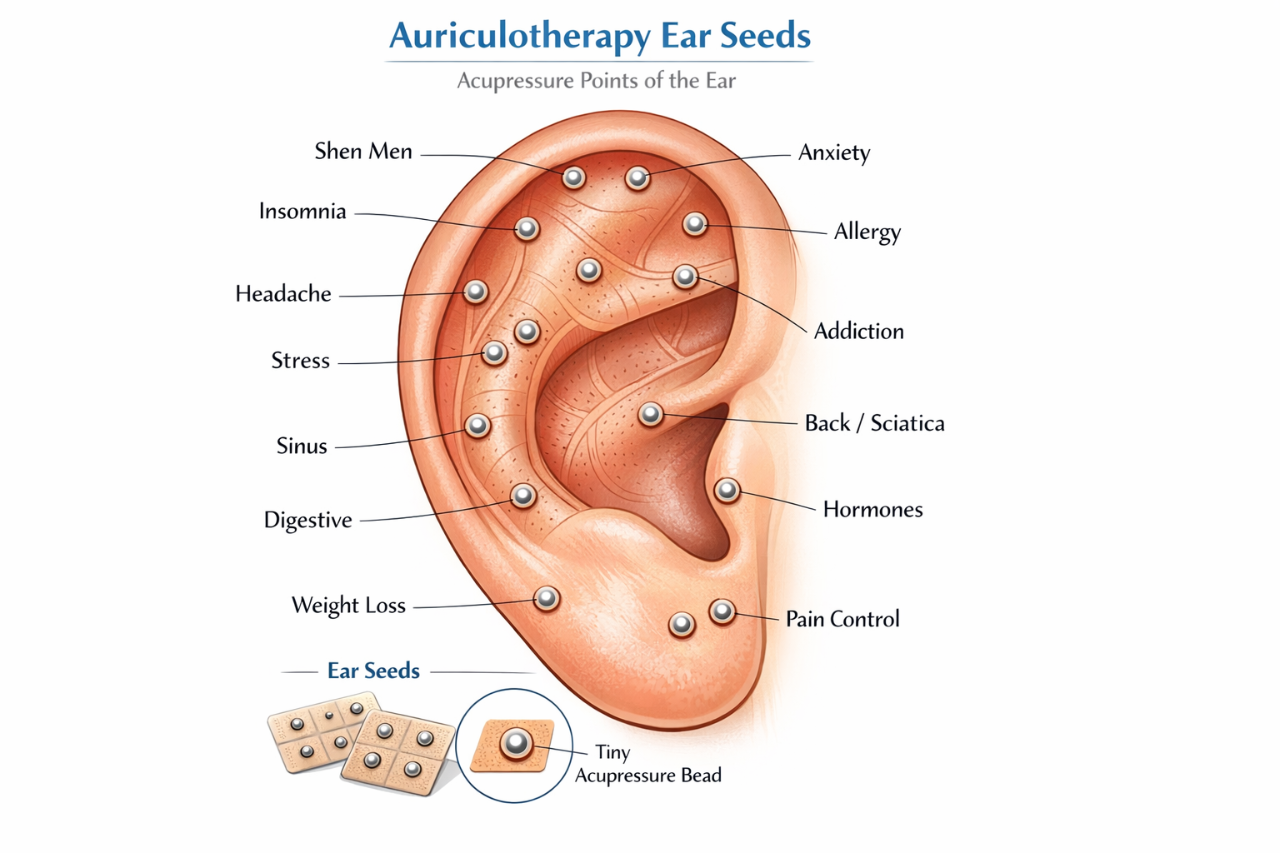
How ear seeding map work
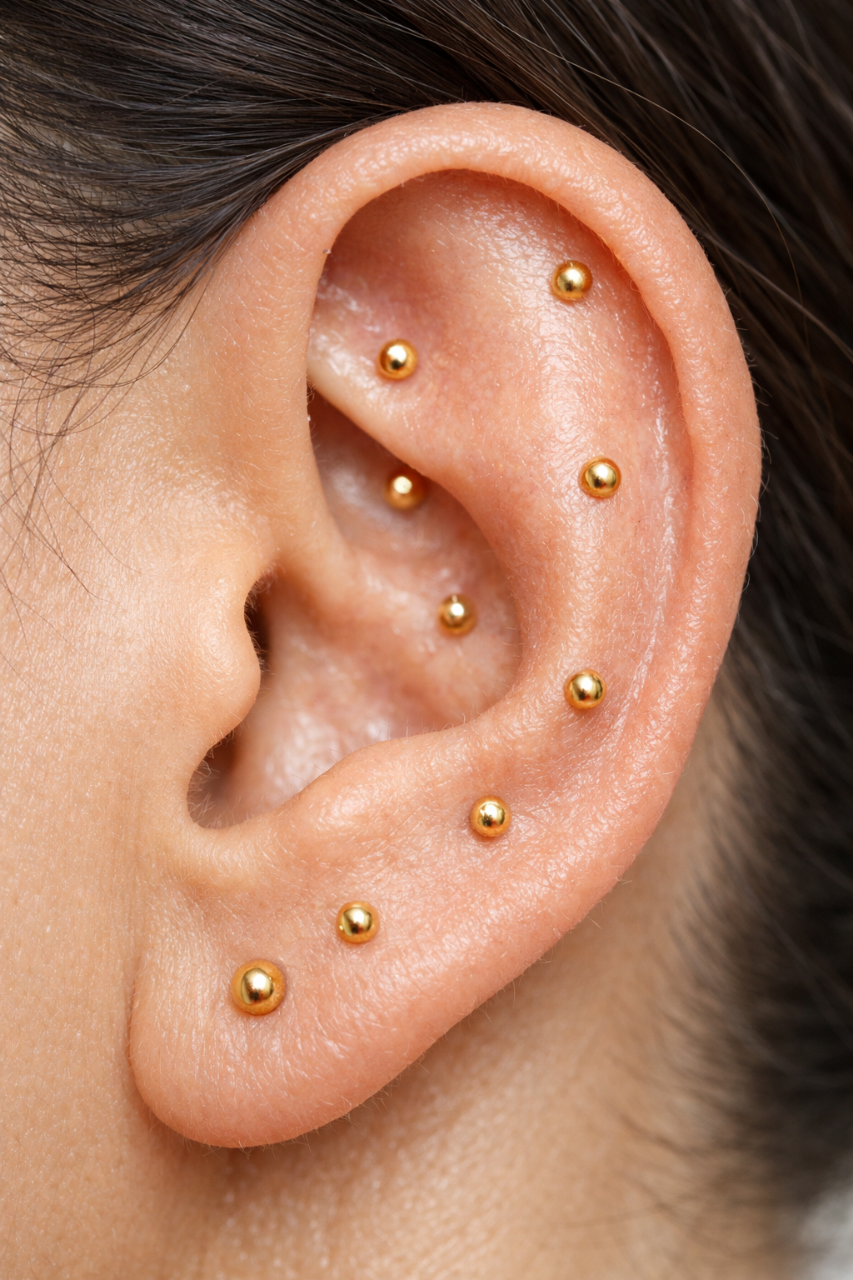
Where to place ear seeds for weight loss
Ear seeds benefits: what do ear seeds do?
Ear seeds are commonly used as a complementary wellness practice and may offer several potential benefits, including:
- Promoting relaxation: Gentle, continuous stimulation of ear points may help encourage calm and reduce daily stress.
- Supporting stress management: Ear seeds can increase body awareness and mindfulness throughout the day.
- Encouraging better sleep: Some users find ear seeds helpful as part of a bedtime or relaxation routine.
- Enhancing emotional balance: Regular use may support focus, mental clarity, and a sense of well-being.
- Providing non-invasive support: Ear seeds offer a needle-free alternative to other auricular techniques.
- Easy at-home use: They are simple to apply and integrate into existing wellness practices.
How to use ear seeds
Follow these steps for safe and effective use:
- Clean and dry your ears: Ensure the outer ear is free of oils or moisture so the seeds will adhere properly.
- Identify target points: Use an ear seeding map to locate points that correspond to your wellness goals, such as stress relief, sleep support, or tension reduction.
- Apply the seeds: Place small seeds, beads, or crystals on the targeted points using gentle pressure.
- Secure with adhesive: Use medical-grade tape or adhesive to keep the seeds in place for continuous stimulation.
- Leave in place for several days: Most ear seeds can stay on for 3–5 days before being replaced or moved to new points.
- Combine with wellness practices: Enhance the effects by pairing ear seeding with mindfulness, meditation, or relaxation exercises.
- Repeat consistently: Regular use helps maintain the benefits and supports overall well-being.
Popular ear seed products and kits
How long do ear seeds last?
Ear seeds are typically worn for three to five days, depending on the type of adhesive used and individual comfort. During this time, they provide gentle, continuous stimulation to specific points on the outer ear. The seeds usually fall off on their own as the adhesive loosens, or they can be removed manually if irritation occurs. After removal, it is generally recommended to allow the ear to rest for a short period before applying new seeds, either to the same points or different ones. Proper skin care and regular replacement help ensure ear seeding remains comfortable, hygienic, and effective as part of a consistent wellness routine.
Do ear seeds really work?
Ear seeds can be helpful for some people as a complementary wellness practice, but their results are not guaranteed and can vary widely. Many users report benefits such as increased relaxation, improved awareness of stress or sleep patterns, and a greater sense of balance when ear seeds are used consistently and placed correctly. However, scientific research on their effectiveness is still limited, and ear seeds should not be considered a medical treatment. Their perceived effectiveness often depends on individual response, expectations, and how they are incorporated into broader lifestyle habits. For these reasons, ear seeds are best viewed as a supportive, low-risk tool rather than a proven solution.
Why do my ear seeds hurt?
Ear seeds may cause discomfort or tenderness if they are placed on sensitive points, pressed too firmly, or worn for longer than recommended. Mild soreness can also occur as the ear responds to continuous stimulation, especially for first-time users. In some cases, irritation may be due to skin sensitivity, adhesive reactions, or pressure applied too frequently. Pain is not a required sign that ear seeds are “working,” and significant discomfort should not be ignored. Removing the seeds, reducing pressure, or repositioning them can help relieve pain, and allowing the ear to rest before reapplying is often recommended.
Best ear seeds
The best ear seeds are those that offer comfort, quality materials, and reliable adhesion. Traditional ear seeds are often made from vaccaria seeds, which have been used for centuries in auricular practices, while modern options may include metal beads, magnetic pellets, or decorative crystals. High-quality ear seeds are small, smooth, and paired with skin-safe, medical-grade adhesive to minimize irritation during wear. Many users benefit from beginner-friendly kits that include an ear seeding map, as proper placement plays a key role in the overall experience. Ultimately, the best ear seeds are those that suit individual skin sensitivity, comfort preferences, and personal wellness goals.
Mount Lai acupressure ear seeds reviews
Reviews of Mount Lai acupressure ear seeds highlight their ease of use, quality materials, and thoughtful design. Many users appreciate the clear instructions and placement guides included in the kits, which make them accessible even for beginners. Customers often mention that the seeds are comfortable to wear, stay in place well, and provide a gentle, continuous stimulation that supports relaxation and mindfulness. While individual experiences vary, most reviews emphasize the overall wellness and self-care benefits of incorporating these ear seeds into daily routines, rather than positioning them as a medical solution.
How much does ear seeding cost?
The cost of ear seeding can vary depending on whether you purchase a kit for at-home use or visit a professional practitioner. At-home ear seed kits typically range from $10 to $40, depending on the materials (such as plant seeds, metal beads, or crystals), the number of seeds included, and whether an ear seeding map or placement guide is provided. Professional ear seeding sessions can cost anywhere from $30 to $80 per session, depending on the practitioner and location. Kits are generally a one-time investment for multiple uses, while professional sessions may offer personalized guidance and placement. Overall, ear seeding is considered a relatively affordable wellness practice that can be adapted to different budgets and preferences.
FAQs about ear seeds
Is ear seeding effective?
What are ear seeds made of?
Do ear seeds go on both ears?
Is ear seeding painful?
Can ear seeds cause headaches?
Are ear seeds safe to use at home?
** Some images in this article were generated using artificial intelligence.