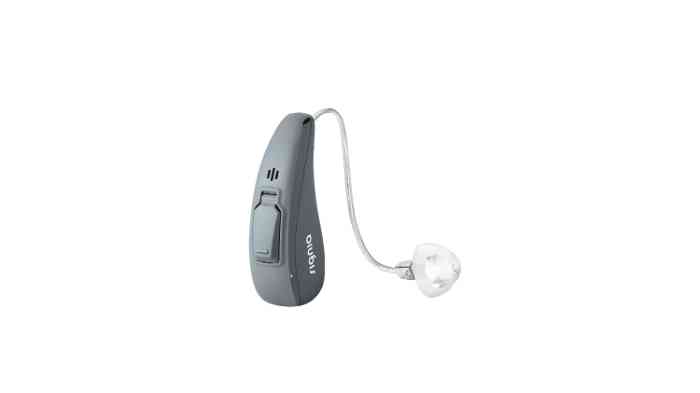
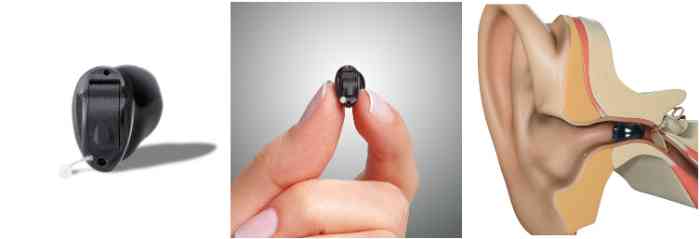
Jabra Enhance Select 700 hearing aids
Learn what Jabra Enhance Select 700 hearing aid coverage includes.
The Jabra Enhance Select 700 is the flagship model in Jabra's over-the-counter hearing aid lineup, and it takes a different approach from most OTC devices on the market. This review covers what it offers, how it performs, and who it suits, so you can judge whether it justifies its premium position.
The Jabra Enhance Select 700 release date was September 2025, when it launched from the company's Lowell, Massachusetts base, replacing the outgoing Select 500 as the top-tier option. It now sits above the Enhance Select 300 ($1,695) and Select 50R ($1,195), priced at $1,995 per pair. It became available immediately through JabraEnhance.com in six colors, rolling out to retail partners in early October.
As a Jabra Enhance Select 700 OTC hearing aid, it's FDA-compliant for over-the-counter sale to adults with mild to moderate hearing loss. It's a micro receiver-in-ear (RIE) device — Jabra's smallest and lightest rechargeable model to date, offering over 24 hours of listening. Its headline technology is SoundScape with Auto Focus, an adaptive noise-reduction system where the microphones adjust automatically to changing environments.
It also includes intelligent feedback management, hands-free calling via TapControl, Bluetooth LE Audio, and Auracast support. A key distinction from budget rivals: Jabra's devices are self-fitting based on an actual hearing test rather than fixed presets, and the price includes three years of professional remote audiology care. The sections below examine its lab-tested performance, real-world use, limitations — including the absence of a telecoil — and how it compares to alternatives.
Jabra Enhance Select 700: complete bundle
The Jabra Enhance Select 700 is sold as a complete package rather than hardware alone, which helps explain its $1,995 price. Here's what's included.
- The core hardware comprises two rechargeable mini RIE (receiver-in-ear) hearing aids, left and right, plus a portable rechargeable charging case that holds three full charges. Because everyone's ears differ, the box contains three different dome styles in various sizes, along with a set of sport locks and the user guide.
- The bigger component is service. Purchases include licensed virtual audiology support covering initial setup, personalized programming, and ongoing adjustments — with unlimited appointments through the app. Buying directly from Jabra Enhance includes three years of professional remote audiology care, while some partner bundles (such as AARP Hearing Solutions) include two years instead. Rather than relying on fixed presets, Jabra pre-programs the aids to your actual hearing profile, either from an online test or a professionally administered audiogram submitted at ordering, with delivery in about a week.
- Some retailers add extras. AARP's Complete Bundle includes an exclusive upkeep kit with 70 domes in assorted styles and sizes, wax guards, a cleaning cloth, and a cleaning brush.
- Buying direct also brings a 100-day return window with a full refund, no questions asked. Bundle contents vary by seller, so confirm what's included before ordering.
Jabra Enhance Select 700: technology and features
- The Jabra Enhance Select 700 is built around SoundScape technology with Auto Focus, GN's most advanced sound processing to date. The system prioritizes speech, reduces background noise, and maintains awareness of your surroundings, while Auto Focus lets the microphones automatically adapt to changing environments for improved clarity in real time.
- Two further features address common frustrations. Intelligent feedback management learns what triggers whistling for each wearer and dynamically eliminates it. The device also detects and softens sudden loud noises — clanking silverware, jangling keys — for smoother listening.
- Connectivity is a standout. The Select 700 supports Bluetooth LE Audio for higher-quality, lower-latency streaming and extended battery life, plus Auracast broadcast audio, letting users tune into public audio streams in airports, lecture halls, and concert venues as that technology rolls out. Hands-free calling works across a wider range of iOS and Android devices, activated by a double-tap via built-in TapControl. A music mode supports live listening.
- Physically, it's Jabra's smallest and lightest rechargeable micro RIE design, offering over 24 hours of listening.
- One notable omission: there's no telecoil, though users can access loop systems via Jabra's MultiMic accessory.

Jabra Enhance Select 700: reviews and complaints
The Enhance Select 700 earns praise for its design, support, and battery life, but independent lab testing reveals a surprising wrinkle worth knowing before you buy.
- In HearAdvisor's lab testing, the flagship 700 earned a SoundGrade of B with a SoundScore of 3.91/5, ranking #16 of 61 OTC devices — solidly competitive, but just at the threshold of top performers. Notably, the outgoing Select 500 it replaced scored higher, earning an A grade in the top 5–14%, so performance actually dropped between generations.
- The 700's weakest metric is speech in noise at 0.9/5 out of the box, despite that being the feature Jabra markets most heavily. Feedback handling, by contrast, is excellent at 5.0/5, with strong own-voice comfort.
- Customer reviews at Best Buy skew positive. Buyers describe them as sleek, comfortable, with the best battery life they'd experienced, and repeatedly praise the professional audiology support. Common complaints from the same reviewers include Bluetooth connectivity issues and a subpar, muffled microphone. Several flag the charging case as bulky — roughly the size of a cigarette pack and too heavy for a pocket.
- Broader complaints center on general (non-audiologist) customer support: slow email replies, difficulty reaching someone by phone, and templated responses, particularly around returns. Calling directly reportedly works better.
Jabra Enhance Select 700: price in the United States (2026)

Jabra Enhance hearing aid models: things to know
Jabra splits its hearing aids into two distinct categories: over-the-counter (OTC) Select models sold online and in stores, and prescription Pro models sold exclusively through Costco.
OTC: the Select range
- All three are FDA-registered receiver-in-canal (RIC) devices for mild to moderate hearing loss, rechargeable with Bluetooth streaming and app control.
- The Select 50R ($1,195) is the entry option — straightforward everyday use, but lacking SoundScape processing and hands-free calling, with only four frequency bands and a desktop charger rather than a portable case. HearAdvisor scored it 3.82/5 (Grade B).
- The Select 300 ($1,695) adds a smaller mini RIE design, hands-free calling, first-generation SoundScape processing, and a portable charging case. Modeled on the ReSound OMNIA, it scored highest of the three: 4.33/5 (Grade A).
- The Select 700 ($1,995) is the flagship, launched September 2025 to replace the Select 500. This micro RIE is Jabra's smallest rechargeable model, adding SoundScape with Auto Focus, Bluetooth LE Audio, Auracast, and TapControl. It scored 3.91/5 (Grade B) — below the 300.
Prescription: the Pro range
- The Enhance Pro 30 ($1,699.99) is Costco's flagship, launched May 2025. Unlike the OTC models, it's professionally fitted and handles mild to severe loss.
- It uses a dual-chip architecture combining GN's 360 All-Around chip with a dedicated AI deep neural network chip — the same lineage as ReSound Vivia. It offers up to 30 hours per charge, an IP68 rating, Auracast, and optional M&RIE. The price includes testing, fitting, follow-up care, and a 180-day trial, though a Costco membership is required.
- The older Pro 20 ($1,599.99) remains available in custom in-the-ear styles, having earned an A grade (4.07/5) in lab testing.
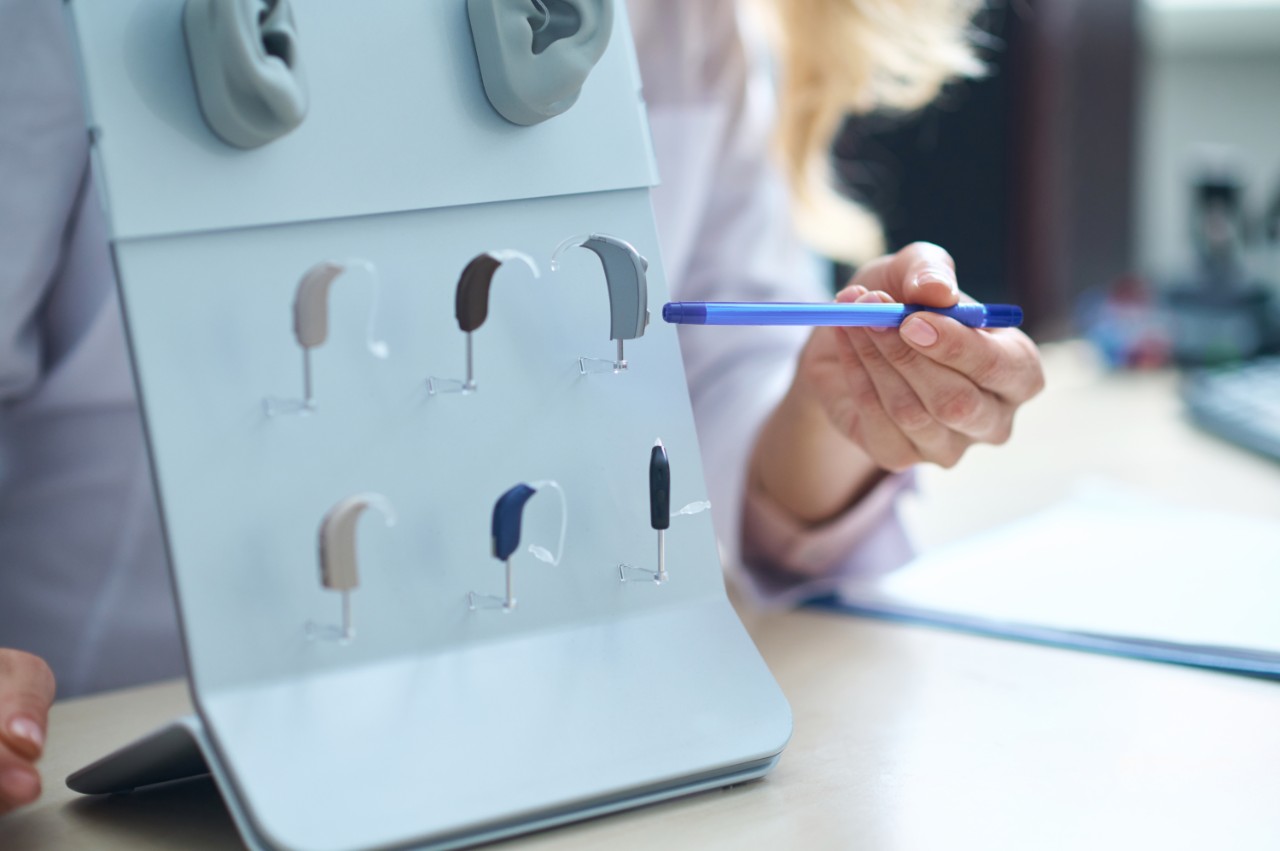
Jabra Enhance Pro 30 vs Jabra Enhance Select 700
The core distinction. These aren't really competing products — they're different categories. The Select 700 is Jabra's flagship over-the-counter (OTC) device, self-fitted remotely and sold online and through retailers. The Pro 30 is a prescription device sold exclusively at Costco, professionally fitted in person. NCOA describes the Pro 30 as offering the same advanced features as the Select 700, but with personalized fitting and in-person care.
- Battery. The Pro 30 leads at up to 30 hours per charge on the rechargeable model, versus over 24 hours on the Select 700. The Pro 30 also offers a disposable-battery variant lasting roughly 7–10 days.
- Durability. The Pro 30 carries IP68, the highest rating available for hearing aids.
- Telecoil. The Select 700 has none. The Pro 30's larger RIE 62 variant includes a telecoil for hearing loops.
- Support model. Select 700 buyers get three years of remote audiology care via app with unlimited virtual appointments, plus a 100-day return window. Pro 30 buyers get in-person care from a Costco hearing instrument specialist (note: dispensers rather than audiologists) and a 180-day trial.
Price
The Pro 30 is cheaper: $1,699.99 versus $1,995 for the Select 700 — and the Costco price includes hearing testing, fitting, follow-up care, and a 180-day trial. The catch is you need a Costco membership and must attend in-person appointments.
Hearing loss range
This is a significant difference. The Select 700 is FDA-limited to mild to moderate loss. The Pro 30 is a fully customizable prescription aid appropriate for mild to severe hearing loss, and if your loss is severe, a provider can fit a custom earmold to reduce feedback.
Sound processing
The Pro 30 has the more advanced platform. It uses a dual-chip architecture combining GN's proven 360 All-Around chip with a dedicated AI deep neural network chip — the same lineage as ReSound Vivia (tech level 9) — making it the only Costco aid with a dedicated AI chip. The Select 700 runs SoundScape with Auto Focus, capable but built on the OTC-adapted platform.
|
Feature |
Jabra Enhance Select 700 |
Jabra Enhance Pro 30 |
|---|---|---|
|
Category |
Over-the-counter |
Prescription |
|
Price (per pair) |
Starting from $1,995 |
Starting from $1,699.99 |
|
Where to buy |
Online, Best Buy, Walmart, Amazon |
Costco only (membership required) |
|
Fitting |
Remote/self-fit via app |
In-person professional fitting |
|
Hearing loss range |
Mild to moderate |
Mild to severe |
|
Chip |
SoundScape + Auto Focus |
Dual-chip: 360 All-Around + AI DNN |
|
Tech lineage |
ReSound Vivia/Savi (likely) |
ReSound Vivia (tech level 9) |
|
Battery |
24+ hours |
Up to 30 hours (or 7–10 days disposable) |
|
Water resistance |
IP68 |
IP68 |
|
Auracast / LE Audio |
Yes |
Yes (RIE 62 variant) |
|
Battery |
Up to 28 hrs |
Rechargeable |
|
Telecoil |
No |
Power dome with slits |
|
Styles |
Micro RIE only |
Micro RIE 62S, RIE 62 |
|
Support |
3 years remote audiology |
In-person Costco care |
|
Trial period |
100 days |
180 days |
- Bottom line: The Pro 30 is the stronger device on paper — cheaper, more advanced AI processing, longer battery, wider fitting range, telecoil option, and a longer trial. Choose it if you have (or don't mind getting) a Costco membership and prefer in-person care. Choose the Select 700 if you want to avoid clinic visits entirely, prefer remote support on your own schedule, and value the convenience of buying online.
- One caveat: the Select 700's HearAdvisor score (3.91/5, Grade B) is available, but I don't have a published lab score for the Pro 30 specifically — the older Pro 20 scored 4.07/5 (Grade A). Prices shift, so confirm current figures before buying.

Elehear Beyond Pro vs Jabra Enhance Select 700
- The core trade-off. Both are OTC receiver-in-canal devices for mild to moderate hearing loss, but they sell fundamentally different propositions. The Beyond Pro is a self-fitting, AI-driven device at a budget-to-mid price. The Select 700 is a premium device whose cost is built largely around bundled professional audiology care and cutting-edge connectivity.
- Price. The gap is substantial: roughly $599 for the Beyond Pro versus $1,995 for the Select 700 — over $1,300 apart. Much of Jabra's premium buys service rather than hardware.
- Independent lab performance. The Beyond Pro wins here, and by a clear margin. HearAdvisor scored it 4.78/5 (Grade A, ranked #2 of 61 OTC devices). The Select 700 earned 3.91/5 (Grade B, #16 of 61). Notably, Jabra's outgoing Select 500 scored higher than the 700 that replaced it — a higher model number didn't mean better sound.
- Speech in noise. This is worth flagging, because it's what Jabra markets most heavily. Despite the Auto Focus system, the Select 700 scored just 0.9/5 out of the box on this metric in HearAdvisor's initial-fit testing. The Beyond Pro's VOCCLEAR 2.0 dual-microphone processing performed considerably better.
- Where Jabra pulls ahead. Connectivity is the clearest advantage: Bluetooth LE Audio and Auracast support make it far more future-proof for public broadcast systems in airports, theaters, and stadiums. It also has stronger IP68 water resistance (versus IPX5), an excellent 5.0/5 feedback-handling score, a smaller and more discreet micro RIE body, and TapControl hands-free calling.
- Professional support. Jabra's main justification for the price: three years of remote audiology care with unlimited virtual appointments, and devices pre-programmed to your audiogram before arrival. ELEHEAR offers remote support through its app but leans on AI self-fitting.
- Extras. The Beyond Pro adds a dedicated Music Mode and one of the best-regarded tinnitus-masking systems in the category (20+ layerable soundscapes). The Select 700 also includes a tinnitus manager.
|
Feature |
ELEHEAR Beyond Pro |
Jabra Enhance Select 700 |
|---|---|---|
|
Price (per pair) |
Starting from ~$599 |
Starting from $1,995 |
|
Style |
RIC, behind-the-ear |
Micro RIE (smaller, more discreet) |
|
HearAdvisor score |
4.78/5, Grade A (#2 of 61) |
3.91/5, Grade B (#16 of 61) |
|
Speech in noise |
Stronger |
Weak initial-fit score (0.9/5) |
|
Feedback handling |
Good |
Excellent (5.0/5) |
|
Processing |
VOCCLEAR 2.0 AI |
SoundScape + Auto Focus (GN ReSound) |
|
Fitting |
AI self-fit, in-app test |
Pre-programmed to your audiogram |
|
Bluetooth |
5.3 |
LE Audio + Auracast |
|
Hands-free calling |
Yes |
Yes, via TapControl |
|
Battery |
~20–24 hrs |
24+ hrs, case holds 3 charges |
|
Water resistance |
IPX5 |
IP68 |
|
Tinnitus masking |
20+ layerable soundscapes |
Tinnitus manager included |
|
Music Mode |
Yes, dedicated |
Yes |
|
Telecoil |
No |
No (MultiMic accessory available) |
|
Professional support |
Remote via app (ElePro) |
3 years unlimited remote audiology |
|
Trial period |
45 days |
100 days |
|
HSA/FSA eligible |
Yes |
Yes |
- Bottom line: The Beyond Pro is the value winner by a wide margin — roughly a third of the price with substantially better independently verified sound performance. The Select 700 justifies its cost through hands-on professional audiology care, future-proof LE Audio/Auracast connectivity, superior durability, a more discreet build, and a longer 100-day trial.
- Choose the Beyond Pro if verified sound quality per dollar matters most and you're comfortable self-fitting. Choose the Select 700 if you want ongoing professional programming, the latest connectivity standards, and a longer risk-free window.
- Two caveats: ELEHEAR's own marketing cites a "#1 of 56" ranking that differs from HearAdvisor's "#2 of 61" — I've used the independent figure. Common Select 700 complaints include Bluetooth connectivity issues, a bulky charging case, and slow general (non-audiologist) customer support. Prices shift often, so confirm current figures before buying.
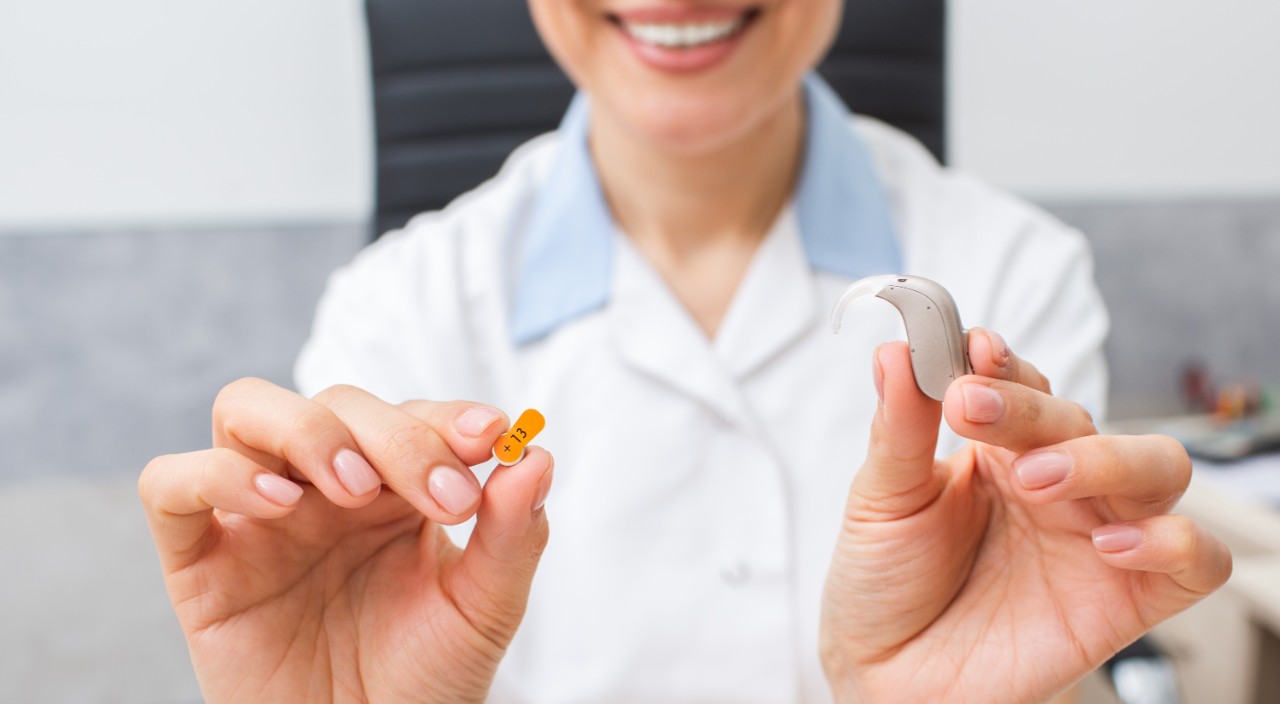
Sennheiser All Day Clear vs Jabra Enhance Select 700
- The core trade-off. Both are premium OTC receiver-in-canal devices for mild to moderate hearing loss, both built on major manufacturer technology — Sennheiser via Sonova (parent of Phonak), Jabra via GN (parent of ReSound). The difference is what you're buying: Sennheiser sells hardware you fit yourself; Jabra sells hardware plus three years of professional audiology care, which is why it costs roughly twice as much.
- Price. A significant gap. The All Day Clear lists at $999.95, often discounted toward $800. The Select 700 lists at $1,995 (HearAdvisor cites a $1,795 display price, and Jabra runs frequent promotions). So you're paying roughly $1,000 more for the Jabra.
- Independent lab performance. Sennheiser wins here. HearAdvisor scored the All Day Clear 4.20/5 with an A grade; the Select 700 earned 3.91/5 with a B grade, ranking #16 of 61 OTC devices. Both sit above the category average of 3.47/5, but Sennheiser edges ahead — notable given it costs half as much. Worth knowing: Jabra's outgoing Select 500 actually scored higher (Grade A) than the 700 that replaced it.
- Speech in noise. Neither is strong here, which is a common OTC limitation. The Select 700 scored just 0.9/5 out of the box in HearAdvisor's initial-fit testing despite Auto Focus being its headline feature. Sennheiser's Slim variant scored 1.0/5, with the standard model performing somewhat better. If crowded restaurants are your main challenge, neither fully solves it.
- Where Jabra pulls ahead. Connectivity is the clearest advantage: Bluetooth LE Audio and Auracast make the Select 700 far more future-proof for public broadcast systems. It also offers a smaller micro RIE body, excellent 5.0/5 feedback handling, TapControl double-tap calling, a longer 100-day trial (versus 45 days), six color options, and the bundled professional care.
- Where Sennheiser pulls ahead. Better lab-verified sound at half the price, plus polished music streaming and Intelligent Scene Detection for automatic environment adaptation. Reviewers describe its sound as smooth and natural.
- The common criticisms. Sennheiser's biggest complaint is its self-fitting test, which reviewers say resembles a sound-preference questionnaire rather than a true diagnostic — meaning you may want paid professional tuning to reach full potential. Jabra's complaints center on Bluetooth connectivity issues, a bulky charging case, a muffled microphone on calls, and slow general (non-audiologist) customer support.
|
Feature |
Sennheiser All Day Clear |
Jabra Enhance Select 700 |
|---|---|---|
|
Price (per pair) |
Starting from ~$999 (often ~$800) |
Starting from $1,995 |
|
Style |
RIC, behind-the-ear |
Micro RIE (smaller, more discreet) |
|
HearAdvisor score |
4.20/5, Grade A |
3.91/5, Grade B (#16 of 61) |
|
Speech in noise |
Weak |
Weak (0.9/5 initial fit) |
|
Feedback handling |
Excellent |
Excellent (5.0/5) |
|
Technology base |
Sonova / Phonak |
GN / ReSound |
|
Fitting |
Self-fit (preference-based test) |
Pre-programmed to your audiogram |
|
Bluetooth |
iOS + Android (strong Android) |
LE Audio + Auracast |
|
Scene adaptation |
Intelligent Scene Detection |
SoundScape + Auto Focus |
|
Battery |
~16–24 hrs |
24+ hrs, case holds 3 charges |
|
Water resistance |
IP68 |
IP68 |
|
Hands-free calling |
Yes |
Yes, via TapControl |
|
Charging case |
Must stay plugged in |
Portable, 3 full charges |
|
Trial period |
45 days |
100 days |
|
Professional support |
Optional, extra cost (~$250–$400) |
3 years unlimited remote audiology |
|
Colors |
1 |
6 |
|
HSA/FSA eligible |
Yes |
Yes |
- Bottom line: The All Day Clear is the better value — higher lab score at roughly half the price, with excellent build and streaming. The Select 700 justifies its premium mainly through bundled professional care, future-proof LE Audio/Auracast connectivity, a portable charging case, a more discreet body, and a longer trial window.
- Choose Sennheiser if you want strong lab-verified sound at a lower price and are comfortable self-fitting. Choose Jabra if hands-on professional programming, the latest connectivity standards, and a 100-day risk-free window matter more than cost.
- One development to watch: Sonova announced in March 2026 that it plans to divest its consumer hearing business, which includes the Sennheiser line — so confirm current availability before buying.

How to use Jabra Enhance Select 700: manual & instructions
1. Before you begin
2. First steps
3. Pairing and the app
4. Daily controls
5. Remote care and updates
6. Care and maintenance
7. Accessories
- The TV Streamer delivers audio from up to 22 feet, and the MultiMic helps in noise and over distances up to 82 feet — both use OneTouch pairing and work with the 700 and 500.
- Check the current manual version online, since instructions can vary by production run.

Jabra Enhance Select 700 accessories
What comes in the box
Streaming and listening accessories
- TV Streamer. This delivers clear TV audio directly to your hearing aids from up to 22 feet away, using easy OneTouch pairing. It's compatible with both the Enhance Select 700 and the older 500. It's particularly useful if you share a room with someone who doesn't need the volume raised.
- MultiMic. A remote microphone that makes hearing a specific person easier in noisy settings and across distances of up to 82 feet. It also uses OneTouch pairing and works with the 700 and 500. Notably, this accessory is also how Select 700 users can access hearing loop systems, since the device itself has no telecoil. The MultiMic includes an FM receiver and a mini-jack socket for wired audio streaming.
- Wireless accessories are paired and activated through the Jabra Enhance Select app.
Maintenance supplies
- Jabra sells a cleaning and care kit containing the supplies needed to clean and maintain the aids over roughly a year of typical use — useful since regular cleaning meaningfully extends device life.
- Sport locks help keep the hearing aids in place during physical activity; the manual includes mounting instructions.
- Replacement domes and wax guards are consumable items you'll need periodically. Extra charging cases are also available.
Worth knowing
- Because the Select 700 supports Bluetooth LE Audio and Auracast, some situations that would traditionally require an accessory — like public broadcast audio in airports or theaters — can be handled by the hearing aids directly as Auracast rolls out.
- Accessory pricing and availability change, so confirm current options and costs on Jabra Enhance's site or with your retailer before ordering.

Jabra Enhance Select 300 vs 700: differences
- The headline finding. This is one of those cases where the more expensive model doesn't win on paper. In HearAdvisor lab testing, the Select 300 scored 4.33/5 with an A grade, while the flagship Select 700 scored 3.91/5 with a B grade, ranking #16 of 61 OTC devices. Both beat the category average of 3.47/5, but the cheaper model tested better.
- Price. The 300 lists at $1,695 (sometimes $1,495), the 700 at $1,995 — roughly a $300 gap.
- Size and design. This is a real advantage for the 700. The 300 is a mini RIE, while the 700 is a micro RIE — Jabra's smallest and most discreet rechargeable model to date. It also comes in six color options versus five for the 300.
- Sound processing. The 300 uses first-generation SoundScape and is modeled on the ReSound OMNIA platform. The 700 runs SoundScape with Auto Focus, an adaptive system where microphone directionality adjusts in real time as you move between environments. It likely borrows from ReSound Vivia or Savi. In practice, the 700's noise handling is described as more aggressive and more natural — though the lab scores complicate that picture.
- Connectivity. The clearest 700 advantage. It adds Bluetooth LE Audio and Auracast, letting you tune into public broadcast audio in airports, lecture halls, and stadiums — a genuinely future-proof feature the 300 lacks. (Note: Auracast currently works with select Android devices; Apple doesn't yet support it.)
- Call handling. Both offer hands-free calling, but the 700 adds TapControl — answer or reject a call by double-tapping your hearing aid or ear, no phone needed.
- Shared features. Both are FDA-registered OTC RIC devices for mild to moderate loss, both rechargeable with portable charging cases holding three full charges (24 hours each), both with Bluetooth streaming, app control, three years of remote audiology care, and a 100-day trial.
|
Feature |
Select 300 |
Select 700 |
|---|---|---|
|
Price (per pair) |
Starting from $1,495–$1,695 |
Starting from $1,995 |
|
Style |
Mini RIE |
Micro RIE (smallest) |
|
HearAdvisor score |
4.33/5, Grade A |
3.91/5, Grade B (#16 of 61) |
|
Launched |
Late 2023 |
September 2025 |
|
Processing |
SoundScape (1st gen) |
SoundScape + Auto Focus |
|
Tech lineage |
ReSound OMNIA |
ReSound Vivia/Savi (likely) |
|
Hands-free calling |
Yes |
Yes, plus TapControl |
|
Bluetooth |
Standard streaming |
LE Audio + Auracast |
|
Charging case |
Portable, 3 charges |
Portable, 3 charges |
|
Battery |
Up to 24 hrs |
24+ hrs |
|
Colors |
5 |
6 |
|
Telecoil |
No |
No |
|
Support |
3 years remote audiology |
3 years remote audiology |
|
Trial period |
100 days |
100 days |
- Bottom line: The 700 is smaller, more discreet, and more future-proof thanks to LE Audio and Auracast, with the convenience of TapControl. But the 300 costs less and actually scored higher in independent lab testing.
- Choose the 300 if value and verified sound performance matter most. Choose the 700 if discreetness, Auracast connectivity, and tap-to-answer calling justify the extra $300.
- One caveat: independent reviewers noted the 700's speech-in-noise score was weak out of the box (0.9/5 at initial fit), despite that being its marquee feature. Professional tuning — included with purchase — may improve real-world results beyond the initial-fit lab figure. Prices shift with promotions, so confirm current figures.

Jabra Enhance Select 300 vs 500: differences
- Important context first. The Select 500 has been discontinued — it was replaced by the Select 700 in September 2025. So this comparison is most useful if you're looking at remaining stock or resale units. The 300 remains in Jabra's current lineup.
- Price. The 500 sat at the top of the range at $1,795–$1,995, while the 300 is the mid-tier option at $1,495–$1,695 — roughly a $300 gap.
- Lab performance. Both earned an A grade from HearAdvisor, and they're remarkably close. The 300 ranked in the top 11% of OTC devices; the 500 in the top 14% (elsewhere described as top 5%). Notably, both scored identically on speech in quiet — 1.38 points above the category average, among the strongest results HearAdvisor has measured in the OTC segment. Both were two-time Expert's Choice Award winners (2023, 2024).
- Where they differ slightly: the 300 achieved a perfect 5.00/5 on feedback handling in both fit conditions, while the 500's own-voice comfort came in slightly below average. Both share the same weakness — music streaming quality, measuring 0.54 points (500) and 0.84 points (300) below average.
- Size. The 500's main selling point. It's a micro RIE — considerably smaller and more discreet than the 300's mini RIE design.
- Connectivity. The biggest functional difference. The 500 uses Bluetooth LE Audio and is Auracast-ready, with hands-free calling for iPhone 11+ and compatible Android devices. The 300 uses Apple's MFi and Android's ASHA connections — meaning iPhone users get hands-free calling, but Android users must keep their phone close to pick up outbound audio.
- Music Mode. The 500 includes Music Mode for improved live music quality; the 300 doesn't.
- Battery. The 500 offered up to 30 hours per charge versus the 300's 24 hours.
|
Feature |
Select 300 |
Select 500 (discontinued) |
|---|---|---|
|
Price (per pair) |
Starting from $1,495–$1,695 |
Starting from $1,795–$1,995 |
|
Style |
Mini RIE |
Micro RIE (smaller) |
|
HearAdvisor score |
Grade A, top 11% |
Grade A, top 14% |
|
Speech in quiet |
+1.38 vs average |
+1.38 vs average |
|
Status |
Current |
Replaced by 700 |
|
Feedback handling |
5.00/5 (perfect) |
Strong |
|
Music streaming |
−0.84 vs average |
−0.54 vs average |
|
Tech lineage |
ReSound OMNIA |
ReSound NEXIA |
|
Bluetooth |
MFi + ASHA |
LE Audio, Auracast-ready |
|
Battery |
Up to 24 hrs |
Up to 30 hrs |
|
Hands-free (Android) |
Limited (phone must be close) |
Yes |
|
Music Mode |
No |
Yes |
|
Support |
3 years remote audiology |
3 years remote audiology |
|
Trial period |
100 days |
100 days |
|
Water resistance |
IP68 |
IP68 |
- Bottom line: The 500 was the more advanced device — smaller, longer battery, LE Audio/Auracast, Music Mode, and full Android hands-free calling. But the 300 matched it on the metric that matters most for conversation (speech in quiet) and actually beat it on feedback handling, for around $300 less.
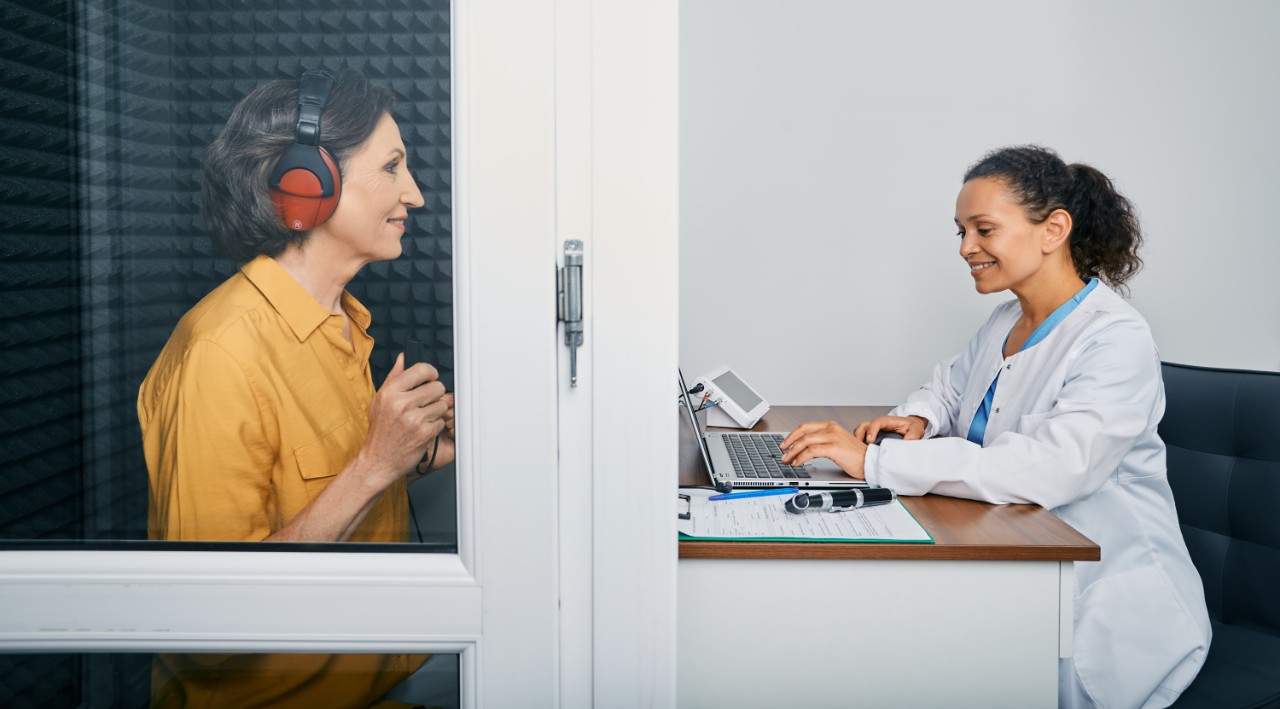
- If you can still find a 500 at a discount and want the smaller form factor and better connectivity, it's a strong buy. Otherwise the 300 delivers nearly the same core sound performance for less — and HearAdvisor noted that comparable or better sound is available at lower price points elsewhere, such as the Lexie B2 Plus ($999)
Jabra Enhance Select 500 vs 700: differences
- The context. The Select 700 launched in September 2025 to replace the Select 500 as Jabra's flagship OTC device. Both are micro RIE receiver-in-ear designs, both use GN ReSound technology, and both include three years of remote audiology care. The 500 is now discontinued.
- The surprising finding. Performance went down between generations. In HearAdvisor lab testing, the Select 500 earned a Grade A (top 5–14% of OTC devices), while the Select 700 scored 3.91/5 with a Grade B, ranking #16 of 61. HearingTracker put it plainly: the 500 was one of the best OTC hearing aids on the market, and the 700's performance dropped in comparison.
- The gap is starkest on speech in noise — the metric Jabra markets most heavily with Auto Focus. The 500 scored above average; the 700 measured just 0.9/5 at initial fit, 0.40 points below the category average. The 500's speech-in-quiet result was also exceptional, at 1.38 points above average — one of the strongest HearAdvisor has measured in the OTC segment.
- Where the 700 improves. Size is the clearest gain: it's smaller than the 500, making it Jabra's most discreet rechargeable RIE yet. It adds TapControl (double-tap your ear to answer or reject calls), broader hands-free calling compatibility across iOS and Android, and comes in six colors versus five. Feedback handling is excellent at 5.0/5. HearingTracker's reviewer also praised its streaming as excellent, with music sounding full and natural with less compression than typical — an area where the 500 was weak (0.54 points below average).
- Where they're similar. One reviewer noted there are minimal differences between the two. Both offer Bluetooth LE Audio and Auracast support, IP68 durability, portable charging cases, and the same audiology care package and 100-day trial.
- Price and battery. The 500 listed at $1,795–$1,995; the 700 at $1,995 (HearAdvisor cites $1,795). The 500 offered up to 30 hours per charge versus 24+ on the 700.
|
Feature |
Select 500 (discontinued) |
Select 700 |
|---|---|---|
|
Price (per pair) |
Starting from $1,795–$1,995 |
Starting from $1,995 |
|
Style |
Micro RIE |
Micro RIE (smaller still) |
|
HearAdvisor score |
Grade A, top 5–14% |
Grade B, 3.91/5 (#16 of 61) |
|
Launched |
2023 |
September 2025 |
|
Speech in quiet |
+1.38 vs average (excellent) |
3.3/5, above average |
|
Speech in noise |
Above average |
0.9/5 (below average) |
|
Feedback handling |
Strong |
5.0/5 (excellent) |
|
Music streaming |
−0.54 vs average |
Praised by reviewers |
|
Processing |
SoundScape |
SoundScape + Auto Focus |
|
Tech lineage |
ReSound NEXIA |
ReSound Vivia/Savi (likely) |
|
Bluetooth |
LE Audio, Auracast-ready |
LE Audio + Auracast |
|
TapControl |
No |
Yes |
|
Support/ trial |
3 years / 100 days |
3 years / 100 days |
|
Battery |
Up to 30 hrs |
24+ hrs |
|
Water resistance |
IP68 |
IP68 |
|
Colors |
5 |
6 |
- Bottom line: The 700 is smaller, adds TapControl, and streams music better. But the 500 outperformed it in independent lab testing — particularly on speech in noise — and offered longer battery life at a similar or lower price.
- If you can still find a Select 500 in stock or as remaining inventory, it's arguably the better sound performer. If you're buying new, the 700 is what's available, and its bundled audiology care means professional tuning may lift real-world results above the initial-fit lab figure.
- One caveat: the 700's lab scores reflect out-of-the-box settings. Since every purchase includes professional programming, tuned performance may differ meaningfully from these initial-fit numbers.

Can you buy Jabra Enhance Select 700 at Costco?
No — you can't buy the Jabra Enhance Select 700 at Costco. The two Jabra lines are deliberately kept separate:
- The Select range is not sold at Costco. The Enhance Select 700 is available directly from JabraEnhance.com, plus retail partners including Best Buy, Walmart, and Amazon. Costco isn't among them.
- Costco sells the Jabra Enhance Pro range instead. These are prescription devices, fitted in person by a Costco hearing instrument specialist. The current flagship is the Enhance Pro 30 at $1,699.99 per pair, launched May 2025. The older Pro 20 ($1,599.99) remains available in custom in-the-ear styles.
Why this matters
Why this matters — and why the Costco option may actually suit you better
If you were considering the Select 700, the Pro 30 is worth a serious look, because on paper it's the stronger device and it costs less:
- Cheaper: $1,699.99 vs $1,995
- More advanced processing: a dual-chip architecture combining GN's 360 All-Around chip with a dedicated AI deep neural network chip — the same lineage as ReSound Vivia
- Wider fitting range: mild to severe loss, versus the Select 700's OTC limit of mild to moderate
- Longer battery: up to 30 hours vs 24+
- Telecoil available on the RIE 62 variant (the Select 700 has none)
- Longer trial: 180 days vs 100
- Price includes hearing testing, fitting, and follow-up care
The trade-offs
- Costco requires a membership, and you'll need to attend in-person appointments at a Costco Hearing Aid Center. Costco also relies mainly on hearing instrument dispensers rather than audiologists.
- The Select 700's advantages are convenience — everything handled remotely via app with unlimited virtual appointments, no clinic visits, and no membership required. It's also the smaller, more discreet device.
In short
Is Jabra Enhance Select 700 ok for tinnitus?
What it offers
- The Select 700 includes a tinnitus manager that uses sound therapies to help mask symptoms. Jabra also states that its hearing aids, tools, and audiology resources help many customers alleviate their tinnitus.
- There's also an indirect benefit worth understanding: for people whose tinnitus accompanies hearing loss, simply amplifying ambient sound often reduces tinnitus perception, because the brain has more external input to focus on. Any well-fitted hearing aid can help this way.
The important caveat
Where the professional support genuinely helps
Alternatives worth comparing
Practical suggestion
- The Select 700's 100-day risk-free trial is genuinely useful here — masking works well for some people and not at all for others, and there's no reliable way to predict which group you're in without trying.
- One health note: tinnitus can occasionally signal an underlying medical issue, particularly if it's sudden, affects only one ear, or comes with hearing loss or dizziness. Jabra's own manual lists similar symptoms as reasons to see a hearing health care professional before self-fitting. Worth getting evaluated rather than treating a masking device as the answer.

Jabra's tinnitus sound masking: an evaluation
- What's actually there. The Jabra Enhance app includes a Tinnitus Manager that generates sound therapy through the hearing aids. On the prescription Pro app, the described controls are: adjusting sound variation and frequency of the Tinnitus Sound Generator, plus a selection of Nature Sounds. On the OTC Select side, the app can generate white noise to mask tinnitus. TheSeniorList picked the Select 700 as their favorite Jabra model for tinnitus, noting all Jabra models have similar tinnitus features.
- The contradiction. NCOA — a reputable, non-affiliate source — states plainly that Jabra Enhance hearing aids do not have specific tinnitus-relief features, and that any benefit comes from amplifying external sound. HearingTracker separately flagged the Pro 20 as having no tinnitus features, unlike other GN options.
- Why both can be true. The feature exists but its availability depends on your model and, on prescription devices, on whether your hearing care professional enables it during fitting. A Costco customer with Pro 20s found the Tinnitus Manager listed in the manual but was told by staff they didn't think it worked with that model — a telling illustration of how inconsistently it's implemented.
- How it compares as a "sound machine". This is where Jabra falls short. Judged purely as a masking tool, the feature set is thin:
|
Capability |
Jabra |
ELEHEAR Beyond Pro |
Apt tinnitus app |
|---|---|---|---|
|
Noise types |
White noise, nature sounds |
White, pink, brown, blue + nature |
Full spectrum + blending |
|
Layering sounds |
No |
Yes (fuse multiple) |
Yes |
|
Left/right balance |
Not documented |
Yes |
Yes |
|
Tone matching |
No |
No |
Yes |
|
Sleep timer |
No |
No |
Yes |
|
Save favorites |
Yes (general settings) |
Yes |
Yes |
Where Jabra genuinely wins
Two real advantages:
- Amplification itself. For tinnitus that accompanies hearing loss, restoring ambient sound often reduces tinnitus perception more than any masker does. The Select 700 is a competent hearing aid, so this benefit is real.
- Three years of remote audiology care. Tinnitus management is highly individual and rarely works on default settings. Having a specialist tune your masking over unlimited virtual appointments is arguably worth more than a longer soundscape list. TheSeniorList's own criteria flagged support as essential for effective tinnitus management.
Jabra's own positioning is cautious. For the Enhance Plus, the company states it is not specifically recommended for tinnitus, though some users find relief from amplification — and points them to the separate free ReSound Relief app for masking sounds.
Verdict
- As a sound machine, Jabra is basic — functional white noise and nature sounds, no layering, no tone matching, no sleep timer. If masking is your primary need, ELEHEAR or a dedicated app paired with any hearing aid will serve you better, and Signia leads on the prescription side.
- As a tinnitus solution overall, it's reasonable — because good amplification plus ongoing professional tuning often matters more than the masker itself.
- A practical route: buy for the hearing aid quality, and use the free ReSound Relief app (GN's own, since Jabra is a GN brand) or a dedicated masking app streamed through the aids. That gives you far better sound control than the built-in manager.
- The 100-day trial is worth using here, since masking helps some people and does nothing for others.
- One health note: if your tinnitus came on suddenly, affects one ear, or comes with dizziness or hearing changes, it's worth having it evaluated by a professional before treating it as something a device can manage — Jabra's own guidance says the same.

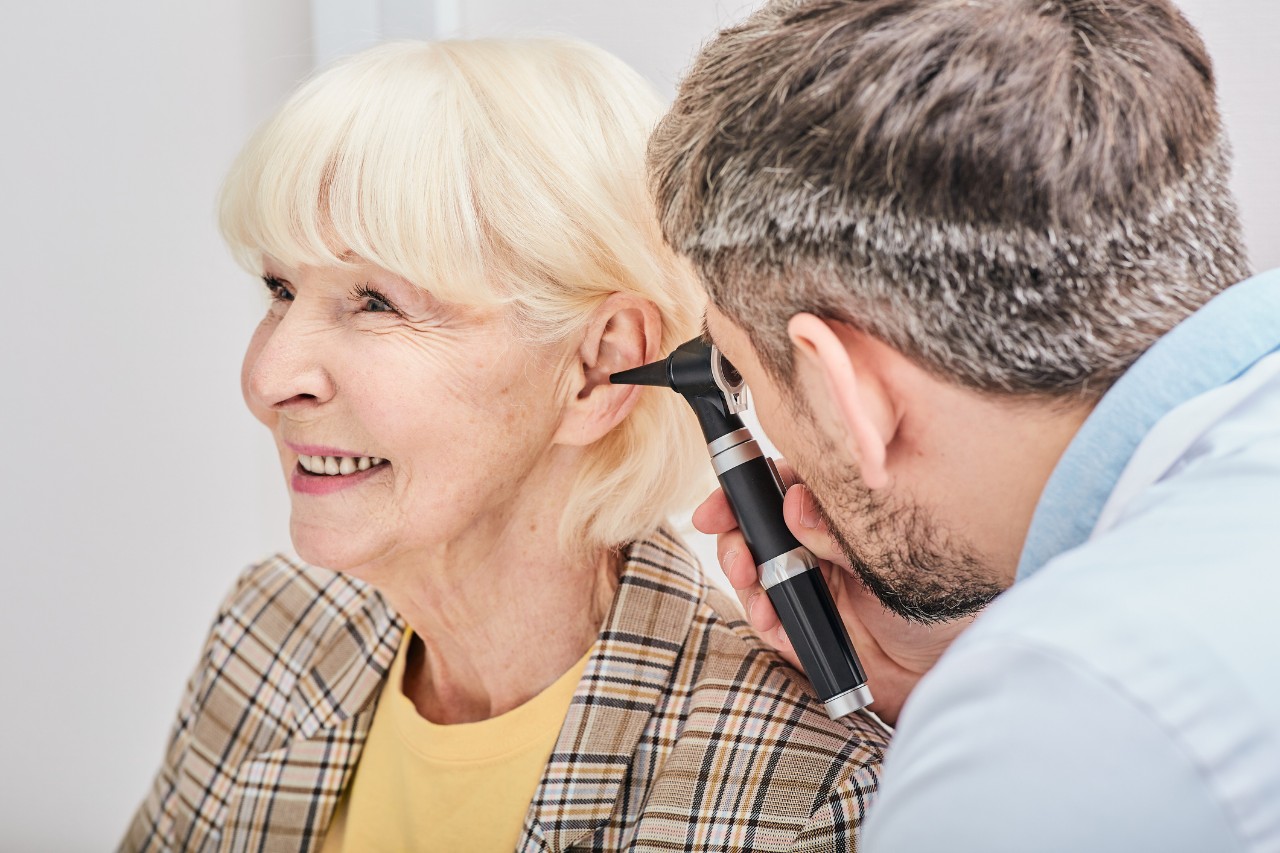
Does Jabra Enhance offer a hearing test?
How the test works
Why it matters more here than with other brands
- This is the meaningful part. Unlike most OTC brands that ship devices with generic presets, Jabra uses your test result to pre-program the hearing aids before they arrive. You can either take their online test or upload an audiogram from a professional hearing exam when you order. The aids then arrive tuned to your specific hearing profile rather than requiring you to self-fit from scratch.
- That's a genuine differentiator against competitors like ELEHEAR or Sennheiser, where you tune the devices yourself through an app after they arrive.
The important caveat
- Jabra's online test is a screening tool, not a diagnostic one. NCOA — which reviewed the brand hands-on — recommends getting an in-person hearing exam at a clinic anyway, specifically to rule out underlying issues that hearing aids can't treat.
- That advice is well-founded. Research on smartphone and web-based hearing tests shows they're reasonably accurate for normal to mild loss but become notably less reliable as loss worsens, and they struggle particularly with asymmetric hearing loss (different levels in each ear). Calibration and headphone quality also introduce error that an online test can't control for.
The safety net
Practical suggestion

With you on your journey to better hearing.
Thank you for submitting your request
We will get in touch with you as soon as possible.Where to buy Jabra Enhance hearing aids
OTC models (Enhance Select 50R, 300, 700)
- JabraEnhance.com — the primary channel. Buying direct is the most complete option. It includes the online hearing test, devices pre-programmed to your hearing profile before shipping, three years of remote audiology care with unlimited virtual appointments, and a 100-day risk-free trial with full refund. The Select 700 launched here first in six colors, before rolling out to retail. Jabra also offers financing that can bring payments below $40/month depending on model and credit terms.
- Retail partners. The Select range is also sold through Best Buy, Walmart, and Amazon. These offer convenience, in-store pickup at Best Buy, and familiar return policies — but the bundled audiology care and pre-programming are tied to Jabra's own service, so check what's included before buying through a third party.
- AARP Hearing Solutions. A partner channel offering its own bundle, which includes two years of audiology care (rather than three) plus an exclusive upkeep kit with 70 domes, wax guards, and cleaning supplies.
Prescription models (Enhance Pro 20, Pro 30)
Which channel suits you
- Buy direct from Jabra if you want the full care package and the longest remote support — this is where the value proposition actually lives.
- Buy from Best Buy, Walmart, or Amazon if you prefer their return policies or want to see the product in store first.
- Buy from Costco if you have a membership, want in-person fitting, or have hearing loss beyond moderate — the Pro 30 handles mild to severe and costs less than the Select 700.
- One practical note: prices shift frequently with promotions, and bundle contents vary by seller. Confirm what's included — particularly the length of audiology care and the trial window — before ordering.
Is Jabra a good hearing aid?
Yes — but only for certain people. Jabra (through its hearing division, often branded Jabra Enhance) makes solid, modern hearing aids, especially if you want something more affordable or discreet. However, they’re not always the best choice for more complex hearing loss.
👍 Where Jabra stands out
1. Great for mild to moderate hearing loss
Their devices are tuned for everyday situations—conversations, TV, restaurants—rather than severe clinical needs.
2. More affordable than traditional brands
Compared to legacy hearing aid companies, Jabra often costs less, especially through:
- Online models (like Enhance Select)
- Retail partnerships (e.g., Costco versions)
3. App control & remote care
You can adjust settings, volume, and sound profiles directly from your phone, and in some cases:
- Get remote tuning by audiologists
- Avoid multiple clinic visits
4. Discreet, modern design
Some models look like wireless earbuds (e.g., Enhance Plus), which people prefer over classic hearing aids.
👎 Where they fall short
1. Not ideal for severe hearing loss
If your hearing loss is significant or complex, you’ll likely get better performance from premium clinical brands like:
- Phonak
- Oticon
- Widex
2. Less customization (especially online models)
You may not get the same level of fine-tuning as in-person fittings.
3. Battery & power limitations
Some models prioritize size and style over maximum amplification or long battery life.
🧠 Bottom line
Good choice if:
- You have mild to moderate hearing loss
- You want a budget-friendly, convenient option
- You’re comfortable using apps and remote adjustments
Consider other brands if:
- Your hearing loss is severe or complicated
- You want maximum performance and in-person care