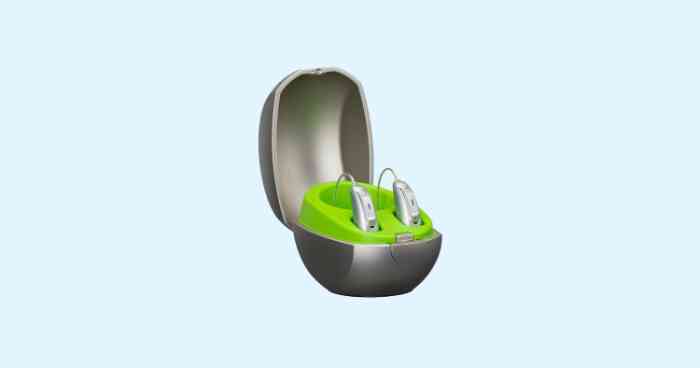
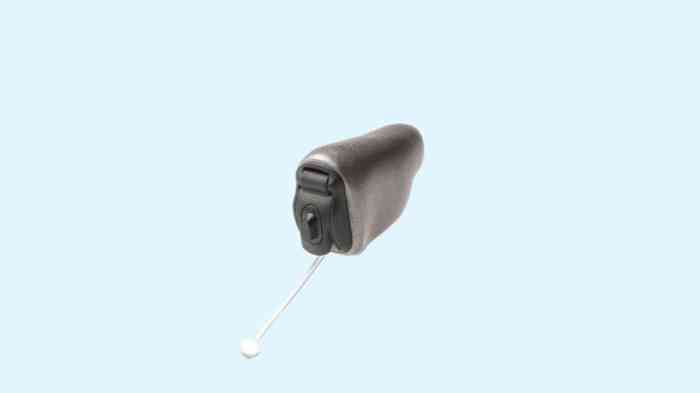
Sony CRE c20 hearing aids: review
Learn everything about Sony CRE c20 hearing aids.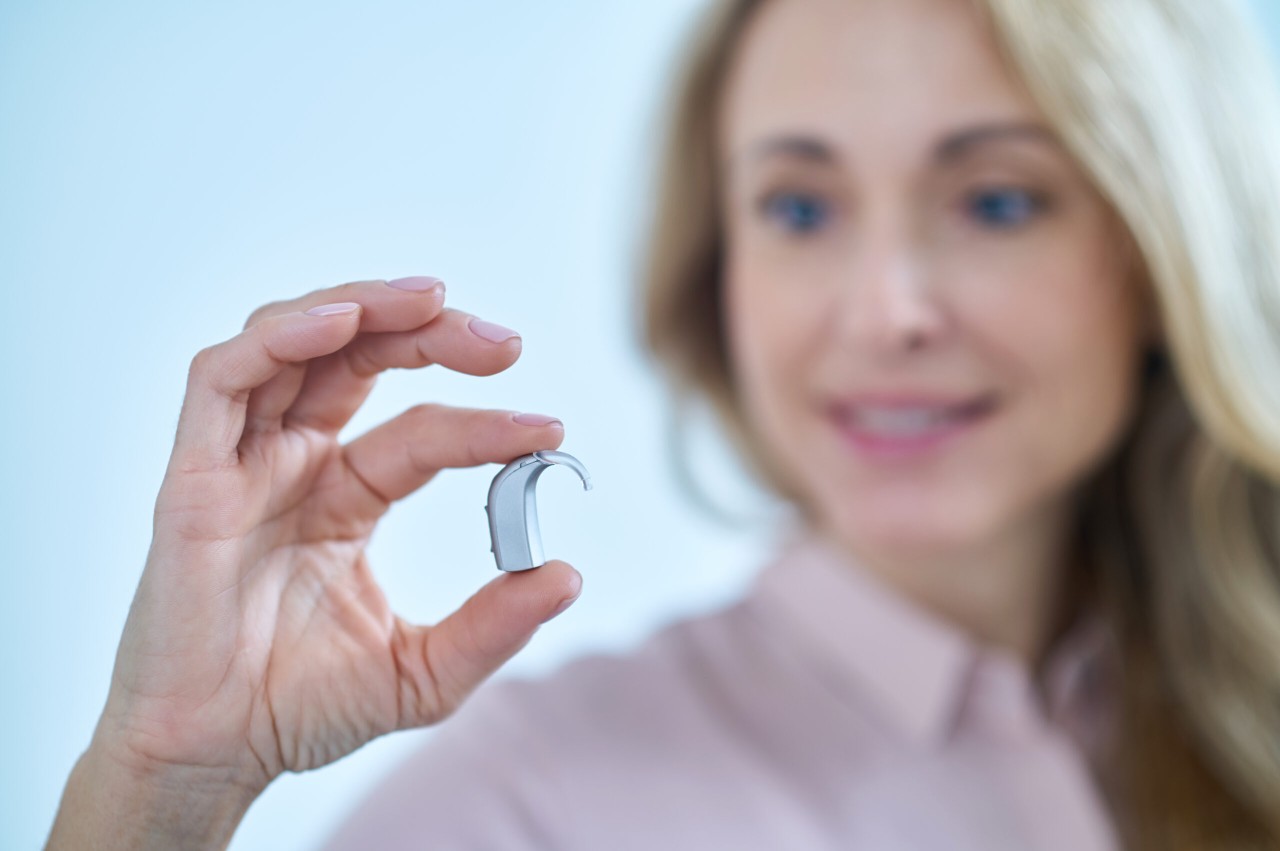
The Sony CRE-C20 was, until recently, one of the most compelling over-the-counter hearing aids available — and it carries an unusual story worth understanding before you consider one.
Launched in September 2024 at $999.99, the CRE-C20 is a completely-in-canal (CIC) self-fitting device for adults with mild to moderate hearing loss. Its defining traits are discretion and endurance: at 18mm and roughly one gram, it's among the smallest OTC aids ever made, and its rechargeable battery delivers up to 28 hours per charge, with a portable case supplying three more. Setup happens entirely through the Sony Hearing Control app, with no clinic visit required.
The technology comes from WS Audiology, one of the world's largest hearing aid manufacturers, reportedly off the same production line as Signia Silk — a device selling for several times the price in clinics.
But there's a significant caveat. In April 2026, Sony and WS Audiology confirmed they would not renew their partnership, and the entire Sony OTC line has been discontinued, with remaining stock clearing at steep discounts.
This review covers the C20's features, lab-tested performance, app, accessories, pricing, and what its discontinuation means for buyers today.
Sony CRE-c20 vented sleeves: things to know
The sleeve is the soft silicone tip that seals the CRE-C20 in your ear canal, and choosing the right type matters as much as choosing the right size. Sony offers two styles, and the difference is meaningful.
- The Sony CRE-C20 OTC hearing aid closed sleeve ships in the box as standard. It creates a full seal, blocking unwanted external noise so conversations come through more clearly. The trade-off is occlusion — that plugged-up sensation many wearers dislike, along with hearing your own voice unnaturally.
- Vented sleeves, sold separately, solve that problem. Their design allows airflow and lets more ambient sound pass through, reducing the plugged-ear feeling and producing a more natural listening experience. They're particularly suited to people with high-frequency hearing loss, whose low-frequency hearing is still intact and doesn't need blocking.
- Both types come in four sizes — XS, S, M, and L — to fit different ear canals, sold in packs of three pairs (roughly $15–$29 depending on retailer). One important compatibility note: CRE-C20 sleeves do not fit the older CRE-C10 or CRE-E10 models.
- Replace them roughly every three months for optimal performance. One owner's practical advice: experiment with both vented and closed sleeves to find what works for your ears.
Sony CRE-c20: review and product info
The Sony CRE-C20 is a self-fitting, invisible-in-canal OTC hearing aid priced at $999.99, made by WS Audiology and aimed at adults with mild to moderate hearing loss. Its defining traits are size and battery: at 18mm and roughly one gram, it's among the smallest OTC devices available, offering up to 28 hours of continuous use with a case supplying 60 more. It carries an IP68 rating and is set up via the Sony Hearing Control app in about 20–30 minutes.
- Expert reviews are broadly positive. HearAdvisor's lab testing awarded a B grade (top 36% of OTC devices), with speech clarity in both quiet and noise measuring well above category averages. Techlicious called it the best-sounding self-fitting non-Bluetooth OTC hearing aid available. Soundly named it their favorite in-ear option under $1,000.
- The main drawback is unanimous: no Bluetooth streaming, increasingly standard even on cheaper rivals. Feedback handling also scored below average.
- Verified buyer reviews echo this. Owners praise comfort, battery life, and clarity — several preferring it to costlier Eargo models — while noting it doesn't reduce background noise much and won't stream from phones. One flagged losing app volume control without an internet connection.
Are Sony CRE c20 OTC hearing aids?
Yes. The Sony CRE-C20 is a genuine over-the-counter (OTC) hearing aid — a category the FDA formally established in October 2022, allowing adults to buy hearing aids directly without a prescription, medical exam, or professional fitting.
- More specifically, the CRE-C20 falls into the self-fitting OTC subcategory. This is an important distinction. Rather than shipping with generic preset amplification levels like simpler devices, the C20 runs an onboard hearing check that plays tones through the hearing aids themselves, then programs the devices to your individual hearing profile. You control the entire process through the Sony Hearing Control app, available for iPhone and Android, with setup and the onboarding test taking roughly 20–30 minutes.
- After the initial fitting, you can refine the sound through the app's main screens, and a Fine Tuning feature addresses specific issues like background noise or sudden loud sounds. Reviewers note Sony has worked to replicate much of what an audiologist would normally do.
- Two important limits: the CRE-C20 is intended for adults 18 and older with perceived mild to moderate hearing loss in both ears — not for severe or profound loss — and self-fitting requires reasonable comfort with smartphones.
Eargo 8 vs Sony CRE c-20: differences
- Both are invisible-in-canal OTC hearing aids for mild to moderate hearing loss, rechargeable, self-fitted through an app, and neither supports Bluetooth streaming. The differences come down to price and measured performance.
- Price is the biggest gap. The Sony CRE-C20 costs $999 versus the Eargo 8's $2,399 — roughly $1,400–$1,700 apart. The earlier Eargo 7 sat around $2,600, so Eargo has consistently occupied the premium end.
- Lab testing favors Sony decisively. HearAdvisor gave the CRE-C20 a B grade (ranked #21 of 56), while the Eargo 8 earned only a C (2.85/5, #39 of 61) — below the category average of 3.47. HearingTracker's expert value score reflects this bluntly: Sony 3.3/5 against Eargo 2.0/5, noting Eargo's performance doesn't match its price.
- Where Eargo wins. Own-voice comfort and feedback handling, plus access to remote hearing professionals — Sony's support is limited to phone and email.
|
Feature |
Sony CRE-C20 |
Eargo 8 |
Eargo 7 |
|---|---|---|---|
|
Price (per pair) |
Starting from ~$999 |
Starting from ~$2,399 |
Starting from ~$2,600 |
|
Style |
Invisible-in-canal |
Invisible-in-canal |
Invisible-in-canal |
|
HearAdvisor grade |
B (#21 of 56) |
C, 2.85/5 (#39 of 61) |
— |
|
Speech in quiet |
4.7 |
2.6 |
— |
|
Speech in noise |
3.2 |
0.3 |
— |
|
Own-voice comfort |
2.9 |
3.2 |
— |
|
Feedback handling |
3.9 |
4.2 |
3.8 |
|
Music streaming |
0.0 (none) |
0.0 (none) |
0.0 (none) |
|
Overall fit score |
4.5 |
3.1 |
— |
|
Bluetooth streaming |
No |
No |
No |
|
Battery |
Up to 28 hrs |
Rechargeable |
Rechargeable |
|
Ear coupling |
Vented sleeve |
Power dome with slits |
Closed sleeve |
|
Support |
Phone and email only |
Remote hearing professionals |
Remote support |
|
Expert value score |
3.3/5 |
2.0/5 |
— |
Bottom line: The C20 delivers substantially better sound for far less. Eargo suits those prioritizing own-voice comfort, feedback control, and included professional support.
Sony CRE c-20: price on average in the US
The Sony CRE-C20 launched at a list price of $999.99 per pair in September 2024, positioning it as a mid-priced OTC option. That figure remains the official reference point across expert reviews, with HearAdvisor, HearingTracker, and Soundly all citing $999.
- In practice, though, most US buyers now pay considerably less. Discounts have become common: Techlicious reported the C20 dropping to $848 (a 15% saving) in mid-2025, calling it the lowest price seen at that point. By June 2026, deal listings showed the aids at $499 — half the original list price. On the secondary market, eBay listings range from roughly $489 to $740 for new or open-box units.
- There's a clear reason for the downward drift. HearingTracker reported in April 2026 that Sony's OTC hearing aids have been discontinued and removed from Sony's website, with manufacturer WS Audiology confirming warranty and service obligations will still be honored. Remaining stock is being cleared at steep discounts.
- For context within the range, the CRE-C10 originally sold for $900 and the Bluetooth-enabled CRE-E10 for $1,099.
- Realistic expectation today: somewhere between $500 and $850, depending on the seller — though availability is shrinking. Confirm stock and warranty terms before buying.

How to use Sony CRE c20: manual & instructions
1. Getting started
- Charge first. Place both hearing aids in the wireless charging case, ensuring the case itself is charged via the supplied USB cable. Indicator lights show charging status. The battery is a permanently built-in lithium-ion cell — there's nothing to replace.
- Power on and off. There are no buttons. The aids turn on when you remove them from the charger and off when you put them back in.
2. Setup and self-fitting
- Download the Sony | Hearing Control app from the App Store or Google Play (iOS 15+ or Android 11+). Open it and follow the on-screen prompts to pair. The app then guides you through the self-fitting process, including a Hearing Profile Check that personalizes your sound settings. Sony's predefined smart hearing settings are based on thousands of real-life audiograms.
- Consumer Reports found setup easy and intuitive with good directions, and noted left and right aids are clearly differentiated.
3. Choosing sleeves
4. Daily controls
5. Cleaning and maintenance
6. Troubleshooting basics
- Weak sound? Check the charge, inspect the sleeves for wax buildup, and verify app volume.
- Connection issues? Enable Bluetooth, restart both phone and aids, then re-pair through the app.
- One quirk flagged by a verified buyer: the app reportedly requires an internet connection, and losing it meant losing volume control. Worth knowing if you're often offline.
- Note: the CRE-C20 does not support Bluetooth audio streaming for music or calls — only the CRE-E10 offers that.

Sony CRE c20 accessories
The CRE-C20 arrives well-equipped, and its consumable parts are designed to be replaced at home — a point several owners single out as a genuine advantage over clinic-dependent devices.
- In the box. The kit includes four sizes of closed sleeves designed to fit snugly in the ear canal for comfort and retention, plus wax guards. HearingTracker called the latter a welcome inclusion, since clogged receiver ports are almost inevitable with in-ear devices. WS Audiology has emphasized consumer education around care and maintenance, which matters directly for how long OTC devices last.
- Charging case. The portable rechargeable case holds up to three additional full charges, with a magnet snapping the aids securely into place — giving roughly 84 extra hours beyond the 28-hour battery.
- Wax guards. Replacements are Signia/Connexx NanoCare 3.0 filters, since Sony's line is built by WS Audiology. Sets typically include 8 filters with an applicator, giving about a four-month supply. They change at home in two simple steps.
- Sleeves. Vented and closed sleeves are sold separately in XS, S, M, and L, in packs of three pairs.
- Bundles. Some retailers offer six-month supply kits combining domes, wax filters, and cleaning tools, plus optional damage-and-loss protection plans.

Sony CRE c10 vs CRE c20 hearing aids
The CRE-C20 is the successor to Sony's original CRE-C10, and the headline difference is power. Sony didn't fix what wasn't broken physically — the two are essentially identical in size and shape, with the same discreet, nearly invisible completely-in-canal design at 18mm and roughly one gram.
- The defining upgrade is that the CRE-C20 is rechargeable. It uses a permanently built-in lithium-ion battery delivering up to 28 hours per charge, with a portable case holding three additional charges. The C10 instead runs on disposable size 10 batteries — offering an impressive 70 hours of continuous use, but with the ongoing cost and fiddliness of replacements. As Techlicious noted, without the C10's ongoing battery expense, the C20 can effectively be considered cheaper despite its higher sticker price.
- Beyond rechargeability, the C20 adds subtly enhanced speech clarity, richer sound quality, several additions to the app and self-fitting process, and new closed sleeves in four sizes. Both share single-mic directionality, an Auto Sound Analyzer prioritizing speech, and — importantly — neither supports Bluetooth streaming.
|
Feature |
Sony CRE-C10 |
Sony CRE-C20 |
|---|---|---|
|
Launched |
2022 |
September 2024 |
|
Original price |
Starting from $1,000 (later $700–$900) |
Starting from $999.99 |
|
Style |
Completely-in-canal (CIC) |
Completely-in-canal (CIC) |
|
Battery type |
Disposable (size 10) |
Rechargeable lithium-ion |
|
Battery life |
Up to 70 hrs |
Up to 28 hrs per charge |
|
Charging case |
None |
Portable, 3 extra charges |
|
Bluetooth streaming |
No |
No |
|
Self-fitting app |
Sony Hearing Control |
Sony Hearing Control (enhanced) |
|
Sleeves |
Included |
4 sizes of new closed sleeves |
|
Wax guards |
Included |
Included |
|
Directionality |
Single-mic |
Single-mic + Auto Sound Analyzer |
|
Water resistance |
— |
IP68 |
|
Sleeve compatibility |
Not interchangeable with C20 |
Not interchangeable with C10 |
Note: HearingTracker reported in April 2026 that Sony's OTC hearing aids have been discontinued, though WS Audiology will honor warranties.

Sony CRE c20 features and technologies
Sound processing
Design and battery
Self-fitting
Bluetooth

Sony CRE c20 app: things to know
The Sony | Hearing Control app is not optional — it's the only way to set up and control the CRE-C20, since the device has no onboard buttons. Here's what's worth knowing before you buy.
Compatibility and setup
- The app is free on the App Store and Google Play, requiring iOS 15 or higher, or Android 11 or higher. It's shared across Sony's OTC line, working with the CRE-C10, CRE-E10, and CRE-C20. Setup and the onboarding hearing test take roughly 20–30 minutes and require reasonable comfort with smartphones.
- Notably, the C20 communicates with your phone by acoustic link as well as Bluetooth — an unusual approach that works reliably for control but doesn't enable audio streaming.
What it does
- The core function is self-fitting. The app runs a Hearing Profile Check that personalizes your settings, drawing on predefined profiles built from thousands of real-life audiograms. Afterward you control volume, sound balance (tone), and directionality, plus a fine tuning assistant that addresses specific complaints like background noise or sudden sounds.
- Consumer Reports found setup easy and intuitive with good directions, and noted left and right aids are clearly differentiated.
The limitations
- Two matter most. First, there are no preset programs to select for different listening situations — a gap compared with most competitors.
- Second, since there are no physical controls on the device, you're locked into the app for every adjustment. If your phone is out of reach or the battery dies, you can't change anything.
User feedback — a real caution
- The app's Apple App Store rating is 2.5 out of 5 from 412 ratings, which is genuinely poor and worth weighing seriously. One verified buyer reported losing volume control entirely when their internet connection dropped, calling it a bad feature — suggesting some functions may require connectivity, not just Bluetooth.
- Other owners were more positive, with one saying app setup was "spot on."
Practical takeaway
- The app does the essential job well — self-fitting is straightforward and the fine tuning is genuinely useful — but the low rating and total dependence on it are real considerations.
- If you're not comfortable managing a smartphone app, or want physical volume buttons, this isn't the right device.
One note
- HearingTracker reported in April 2026 that Sony's OTC line has been discontinued, so future app updates and support may be limited. Worth confirming before buying.

Where to buy Sony CRE c20 in the US and Europe
United States
- Remaining inventory is still circulating through select WSA channels and third-party retailers including Walmart, Best Buy, and Amazon, often at discounted prices. Specialist online sellers like Soundbright, Diglo, Hearing Shop, and Hears Hearing & Hearables have also stocked the C20 and its accessories.
- The secondary market is active too — eBay listings range from roughly $440 to $740 for new and open-box units, and deal sites have shown prices as low as $499.
- Expect availability to keep shrinking. One forum user reported in January 2026 that the C20 was already out of stock at multiple retailers.
Europe
- There are no verified evidence of current European retail availability. Sony's OTC hearing aids were built around the FDA's US over-the-counter category, established in 2022, which doesn't have a direct equivalent across the EU — most European countries still route hearing aids through licensed professionals or pharmacy channels.
- If you're in Italy or elsewhere in Europe, our practical suggestion is to check Sony's regional site and local WS Audiology channels rather than assuming the US listings apply. Importing from a US seller is possible but risky here, given the warranty situation and lack of local support.
Two important cautions
- Warranty. WSA has committed to honoring warranty and service obligations for purchasers — but confirm this applies to your specific seller, especially for eBay or open-box units, which often carry no returns.
- App support. The Sony Hearing Control app is essential to operating the device, and future updates may be limited now the partnership has ended. Worth weighing.
Alternatives worth considering
- Given the discontinuation, reviewers now point elsewhere: Soundly recommends the Eargo 8, Sennheiser All Day Clear, or Nuance Audio for OTC, and Signia Silk as the closest prescription equivalent — fitting, since it comes off the same WSA production line as the C20.
- If you find a C20 at a genuinely low price and don't mind buying into a discontinued line, it remains a well-regarded device. But for a product with an active roadmap and ongoing app support, one of the alternatives is the safer choice.