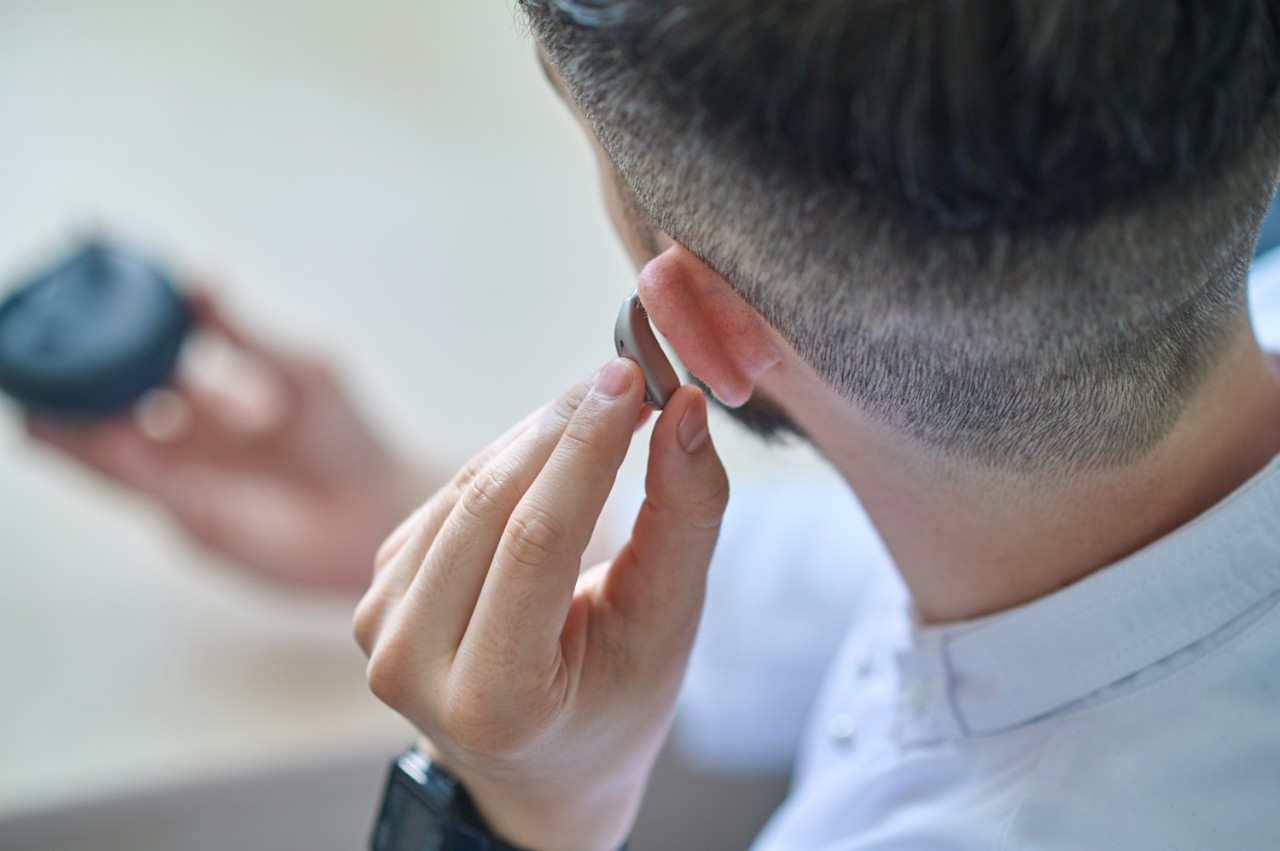
CROS hearing aid and the differences with BiCROS hearing aid
CROS hearing aids: prices, pros and cons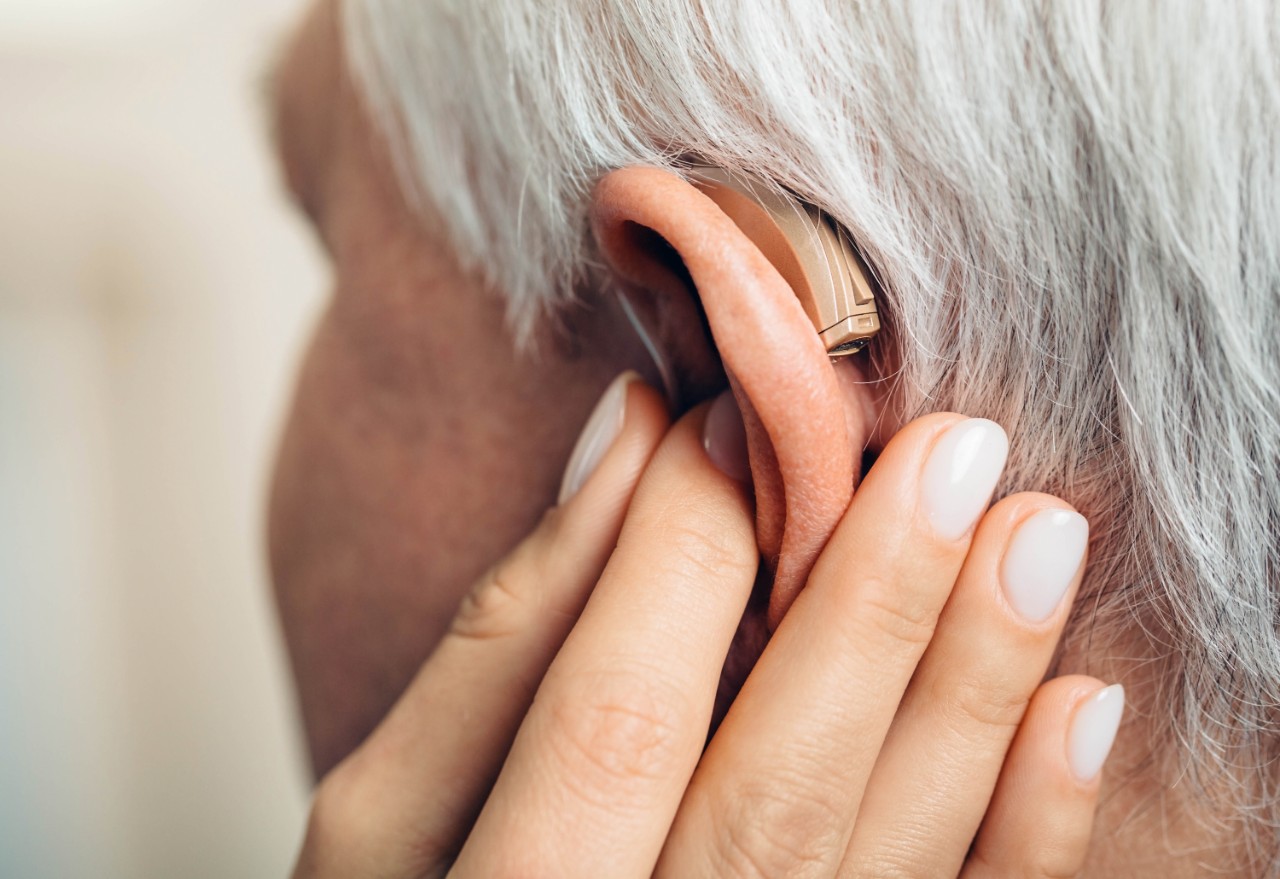
Living with hearing loss in one ear can make everyday listening more challenging than expected and traditional hearing aid are not designed to solve this problem. Instead, a CROS hearing aid for single‑sided deafness is designed to help users stay aware of sounds from all directions, improving communication without relying on traditional amplification.
What is a CROS hearing aid?
A CROS hearing aid system (Contralateral Routing of Signals) is specifically designed for individuals with hearing loss in one ear, while the other ear has normal hearing. The CROS hearing aid system works by capturing sounds from the non-hearing side and transmitting them to the better-hearing ear, allowing for improved awareness of sounds on both sides. In this setup, a CROS hearing aid is worn on the non-hearing side, which then sends sounds wirelessly to the hearing aid on the functional ear.
For those with some degree of hearing loss in the better ear as well, a BiCROS system is used, where the device also amplifies sounds in the functional ear. This approach offers a fuller auditory experience, especially in social or noisy environments, and is often chosen by people seeking enhanced spatial awareness and sound localization without the need for surgery.
Latest innovations in CROS hearing aids
Modern CROS hearing aids have evolved significantly in recent years, offering more advanced solutions for people with single‑sided deafness. Today’s CROS systems focus on improved speech clarity, smarter directional microphones, and more effective noise reduction, making conversations easier in challenging listening environments such as restaurants, meetings, or crowded spaces.
Many current CROS hearing aids also feature Bluetooth connectivity, allowing seamless integration with smartphones for calls, media streaming, and app‑based adjustments. Rechargeable batteries have become increasingly common, providing longer daily wear time and greater convenience. In addition, newer CROS systems offer more intuitive sound processing, with automatic adjustments that adapt to different environments without requiring manual changes. These improvements make modern CROS hearing aids more comfortable, discreet, and effective than previous generations.
Bluetooth CROS hearing aid

Best CROS hearing aids
Phonak | Signia | Oticon | |
|---|---|---|---|
Key technologies |
AutoSense OS, which automatically adapts to different listening environments |
Advanced directional microhpones and intelligent noise reduction |
Speech enhancement and wind‑noise reduction |
Connectivity |
Bluetooth compatibility with smartphones and other devices |
Bluetooth for phone calls, music and audio streaming |
Wireless connection to smartphones and other devices |
Main benefits |
Excellent speech clarity, effective handling of complex acoustic environments and ease of use |
Discreet design, high comfort and natural sound quality |
Clear and balanced listening across different environments, with strong comfort and durability |
Ideal for users who want |
A reliable, fully automatic listening experience across different everyday situations |
A modern, stylish solution that integrates easily into daily life |
A stable solution well integrated into the oticon ecosystem |
CROS hearing aid cost
CROS hearing aid cost in the US is generally positioned in the mid-to-premium prescription hearing aid range, since the system includes a transmitter on the non-hearing side and a receiving device on the better ear. On average, prices typically range from $2,500 to $5,000 per pair, depending on the brand, technology level, rechargeability, Bluetooth features, and whether professional fitting services are included.
Premium models from brands such as Phonak, Signia, or Widex may exceed this range, especially when bundled with advanced speech-in-noise processing and follow-up care. Because CROS systems require precise wireless routing and custom programming, the final price often reflects both the hardware and the audiology services included in the package.
Disclaimer: prices mentioned are indicative and based on publicly available third‑party sources, provided for informational purposes only and may vary depending on provider and location.
CROS hearing aid at Costco
Costco offers a variety of hearing aids as affordable and reliable solution, including CROS models. These devices provide clear sound quality and enhanced speech recognition, which can significantly improve communication in everyday situations.
Costco is known for offering competitive pricing and often includes services like hearing aid fittings, follow-up care, and adjustments, making it a convenient option for those in need of CROS hearing aids. Whether you’re new to hearing aids or looking to upgrade, Costco's selection of CROS hearing aids ensures you get quality and value without the high cost typically associated with hearing healthcare products.
CROS hearing aid pros and cons
Pros
- Transmit sound from the non‑hearing ear to the better‑hearing ear, improving sound awareness
- Improve spatial awareness and speech understanding, especially in noisy environments
- Reduce listening effort and the feeling of isolation in social situations
- Available with modern features such as Bluetooth connectivity and rechargeable batteries
- Discreet designs and increased comfort compared to older generations.
Cons
- Work best only when the better‑hearing ear has normal or near‑normal hearing
- Not suitable as a standalone solution if significant hearing loss is present in both ears
- Do not provide traditional sound amplification in the non‑hearing ear
- May require an adjustment period to get used to wearing two devices
- Less effective for users who primarily need strong amplification rather than sound routing.

CROS hearing aid reviews
CROS hearing aid reviews generally report positive outcomes for people with single‑sided deafness, particularly in terms of improved sound awareness and easier communication in daily situations. Many users note that conversations feel more balanced, especially when sounds come from the side of the non‑hearing ear or in environments with background noise.
Reviews also frequently mention the comfort and discreet design of modern CROS hearing aids, along with the convenience of features such as Bluetooth connectivity and rechargeable batteries. At the same time, user feedback highlights the importance of realistic expectations: CROS hearing aids do not restore hearing in the deaf ear, but instead help reduce listening fatigue by redirecting sound more effectively. Overall, therefore, reviews suggest that CROS systems can be a valuable solution when properly selected and fitted with professional guidance.
CROS and BiCROS hearing aids: key differences
CROS hearing aids
- Designed for people with little to no usable hearing in one ear and normal hearing in the other.
- The device on the poorer ear captures sounds coming from that side.
- Sounds are wirelessly routed to the better ear.
- The better ear does not receive amplification, since hearing is normal.
- Best for users who want better awareness of sounds coming from their non-hearing side.
BiCROS hearing aids
- Designed for people with one unaidable ear and hearing loss in the better ear.
- The device transfers sounds from the poorer ear to the better ear.
- The better ear also receives sound amplification.
- This improves both directional awareness and speech clarity.
- Best for users with asymmetrical hearing loss affecting both ears.
BiCROS hearing aid cost
BiCROS hearing aid cost in the US is generally slightly higher than standard hearing aids because the system includes two coordinated devices and specialized fitting. On average, prices typically range from ~$3,000 to $5,000 per pair, depending on the brand, technology level, rechargeability, Bluetooth features, and whether fitting services are bundled. Premium systems from brands like Phonak, Signia, or Oticon can exceed this range, especially when advanced speech-in-noise processing and wireless streaming are included. Professional fitting is particularly important with BiCROS systems, as the receiving ear often requires precise amplification settings in addition to signal routing.
Disclaimer: prices mentioned are indicative and based on publicly available third‑party sources, provided for informational purposes only and may vary depending on provider and location.
FAQs on CROS hearing aids
Are CROS hearing aids covered by insurance?
Are CROS hearing aids effective?
Are CROS hearing aids over-the-counter?
Are CROS hearing aids rechargeable?