Testing an infant’s hearing at home can help parents notice early warning signs, but it doesn’t replace professional screening. This article explains how to test baby hearing at home, limits of home tests, and when to seek clinical support.
Can you test infant hearing at home?
Testing infant hearing at home is possible only at a basic observational level. Parents often wonder how to check their newborn’s hearing after birth or following a failed infant hearing test. While newborn hearing screening is performed in hospitals with specialized equipment, home checks can help parents notice behaviors that may require further evaluation.
At-home hearing observations focus on how an infant reacts to sounds rather than measuring precise hearing thresholds. Typical reactions include startling at sudden noises, turning the head toward a familiar voice, or blinking in response to sounds. Unlike clinical tools such as ABR (auditory brainstem response) tests for infants, home methods cannot diagnose hearing loss but can help highlight potential concerns early, prompting professional assessment.
If you’re concerned about your baby’s hearing, an online hearing test or checklist may help parents understand what signs to watch for, but these tools cannot replace a professional evaluation. They are best used as a guide to know when to seek expert care
How to test baby hearing at home safely
Parents who want to observe their baby’s hearing at home should focus on age-appropriate responses, as newborns and older infants react differently in the first months of life.
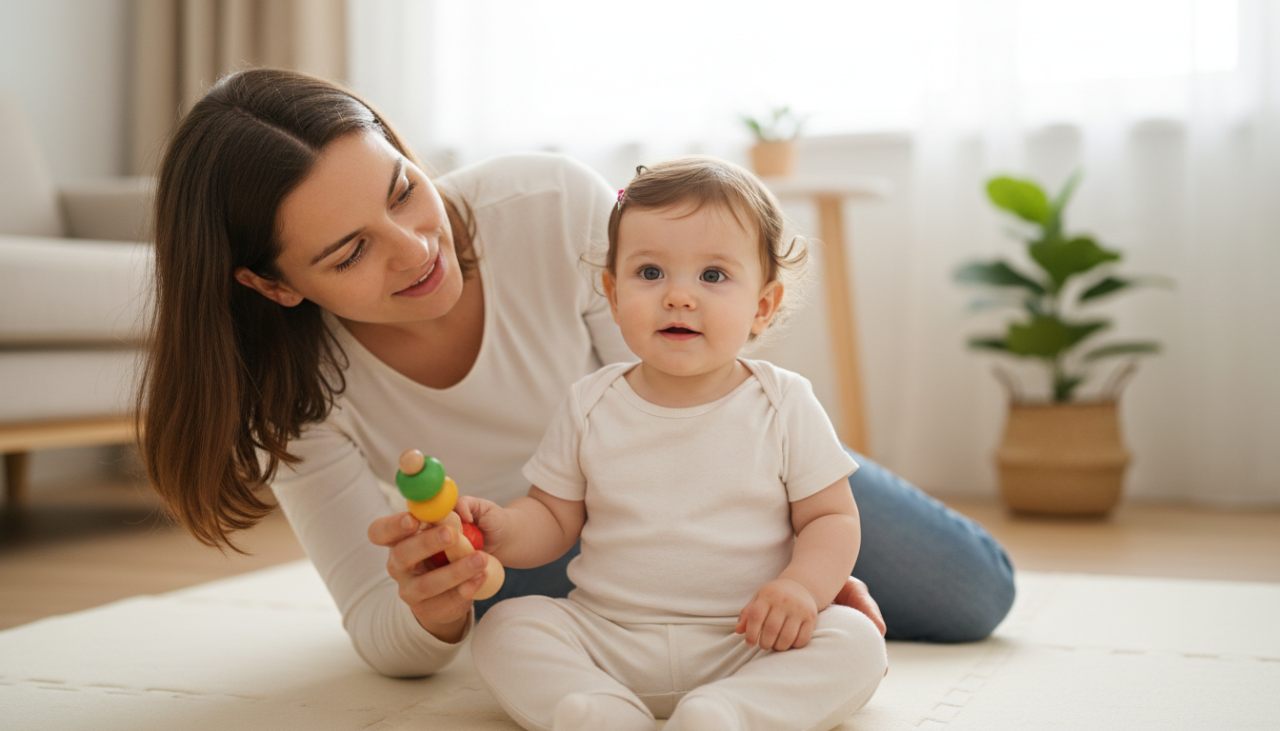
In quiet environments, infants may show subtle responses, such as startling, blinking, stopping sucking, or turning their head toward familiar sounds. Gentle sounds—like soft claps, rattles, or talking voices—can be used to observe reactions, but volume should never be excessive, as loud noises can startle or stress the baby. Repeating the sounds from different positions around the infant can help determine whether responses are consistent.
It’s also important to consider factors such as sleep cycles, alertness, and general health, which can influence reactions. Observations should be done briefly and calmly, never forcing responses, and always in a safe environment.
Newborn hearing test at home
For newborns, responses are often subtle and inconsistent, which is normal. A lack of reaction does not automatically indicate hearing loss, as infants’ neurological development and sleep patterns strongly influence behavior. This is why newborn hearing tests at home should always be considered observational, not diagnostic.
Parents can take notes on patterns in their baby’s responses and share these observations with a pediatrician or audiologist, which can be helpful for follow-up assessments. Even small or delayed reactions can provide early warning signs when interpreted by professionals.

The key to maintaining healthy hearing is identifying any potential issues early. Taking a professional hearing test is an important first step.
For a quick way to check your hearing, you can try a preliminary online hearing test. While it’s not a substitute for a full clinical assessment, it can give you an initial insight into your hearing and help decide if a professional evaluation is needed.
Hearing tests for infants at home: limits
Home hearing checks have significant limitations. They cannot detect mild hearing loss, single-ear (unilateral) hearing loss, or auditory neuropathy. Conditions like conductive hearing loss caused by fluid in the middle ear, or sensorineural hearing loss, require specialized clinical equipment.
Apps, online tools, or DIY methods designed for adults are not validated for infants. They can give false reassurance or lead to delayed professional care. Parents should always view at-home observations as a first step to identify potential concerns, not a substitute for audiologist-administered tests.
Failed infant hearing test: what it means
A failed infant hearing test can be worrying for parents, but it does not automatically mean that a baby has permanent hearing loss. In many cases, temporary factors such as the presence of vernix in the ear canal, fluid in the middle ear, or movement during the screening can interfere with results and lead to a failed test.
When an infant fails a hearing test in one ear or fails twice, follow-up testing becomes essential to understand the cause. An infant hearing test failed in one ear may point to unilateral hearing loss, a condition that still requires careful monitoring and, if confirmed, early intervention to support normal speech and language development.
If an infant failed a hearing test twice, referral for more detailed diagnostic assessments, such as an ABR hearing test for infants, is standard practice. This exam evaluates how the auditory nerve and brainstem respond to sound and is highly reliable, even when the baby is asleep, helping specialists determine whether hearing loss is temporary or permanent and what steps should follow.
When to seek professional infant hearing tests
Parents should act promptly if they notice any signs of potential hearing difficulties in their child. Early diagnosis is crucial, as untreated hearing issues can impact language development, cognitive skills, and communication.
Professional hearing checks are recommended for infants in the following situations:
- If the baby does not respond to sounds within the first few months of life.
- If early babbling or vocalisations are delayed.
- If previous tests or screenings have indicated possible hearing concerns.
It’s important to remember that at-home checks cannot replace a specialist assessment. At the first sign of concern, parents should consult a paediatrician or audiologist to ensure timely and appropriate intervention.

FAQs about at-home hearing checks for infants
How can I test my newborn’s hearing at home?
Can you do a hearing test at home for infants?
What if my infant hearing test failed?
Are home hearing test apps safe for babies?
When should I book an infant hearing test?