
Artificial intelligence in hearing aids
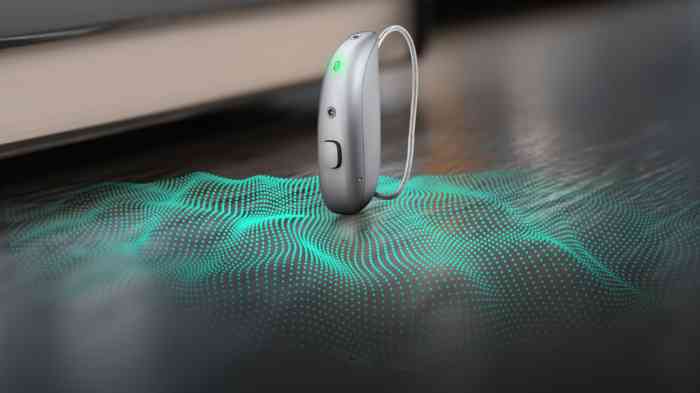
 

AI-powered hearing aids are revolutionising auditory assistance by automatically adapting to different sound environments, enhancing speech clarity, and reducing background noise. These intelligent devices learn users' preferences over time, providing a more personalised and seamless listening experience.

This guide explains how AI hearing aids work, which models lead the market in Australia, what they cost, and whether they are worth the investment.


What is artificial intelligence?

Artificial Intelligence (AI) is a branch of computer science that enables machines to mimic human intelligence by learning, reasoning, and making decisions.

Instead of relying on fixed instructions, AI systems use algorithms — such as machine learning and deep neural networks — to recognise patterns, adapt to new information, and improve performance over time.

From virtual assistants and self-driving cars to healthcare and hearing aids, AI powers everyday technologies that make life smarter, faster, and more personalised.

What are AI hearing aids?

AI-powered hearing aids are next-generation hearing devices designed to go beyond simple sound amplification. Unlike traditional models, they can automatically analyse the surrounding environment, adjust settings in real time, and prioritise important sounds such as speech while reducing background noise.

This allows users to enjoy clearer conversations, greater comfort in noisy environments, and less need for manual adjustments. By continuously learning from everyday listening situations, AI hearing aids can deliver a more natural, personalised, and adaptive hearing experience tailored to each individual's lifestyle and listening needs.

AI hearing aids vs traditional hearing aids

Traditional hearing aids use fixed sound profiles and primarily amplify all sounds. They have limited connectivity, often require manual adjustments, and generally do not distinguish effectively between speech and background noise.

AI hearing aids, by contrast, automatically adapt to different listening environments, personalise settings based on the user's preferences, and support Bluetooth and smartphone connectivity. Many also include advanced features such as health tracking, tinnitus management, and real-time speech enhancement.

While AI hearing aids are typically more expensive, their ability to continuously optimise sound makes them a superior choice for most users — particularly those who frequently encounter challenging listening environments such as restaurants, meetings, social gatherings, and busy public spaces.

AI vs Traditional Hearing Aids

Feature

Traditional Hearing

AI Hearing Aids

Automatic adjustments

❌ Limited

✅ Continuous

Speech enhancement

Basic

Advanced

Noise reduction

Basic

AI-powered

Bluetooth connectivity

❌ Limited

Extensive

Personalisation

Manual

Learns over time

Health tracking

❌ No

✅ Available

Price

Lower

Higher

Are AI hearing aids worth the money?

AI hearing aids are generally considered worth the investment for those seeking clearer, more natural hearing. Their ability to automatically adjust to different environments, reduce background noise, and personalise sound makes daily conversations easier and less tiring. While they cost more than traditional hearing aids, the enhanced comfort, convenience, and long-term benefits often justify the higher price — particularly for active users in social and professional settings.

New technology behind AI hearing aids

Three core technologies power modern AI hearing aids: machine learning, deep neural networks (DNNs), and smart sensors. Together, they enable hearing aids to understand not just sound, but context — delivering a personalised, adaptive listening experience.

Machine learning in hearing aids

Machine learning allows hearing aids to continuously adapt to a user's listening habits and environments. Instead of relying on fixed settings, the device learns from real-world experiences — conversations at home, in restaurants, or outdoors — and automatically fine-tunes sound processing over time. The more the hearing aid is used, the better it becomes at predicting what the listener wants to hear. The result is a highly personalised experience where speech is clearer, background noise is reduced, and users enjoy greater comfort in daily life.

Deep neural networks (DNNs) in hearing aids

Deep neural networks (DNNs) are advanced algorithms inspired by how the human brain processes information. In AI hearing aids, DNNs analyse complex sound patterns to separate speech from surrounding noise with remarkable accuracy — they can focus on a single speaker's voice even in a crowded café or noisy street. A 2020 study in Ear and Hearing found that DNN-based noise reduction produced significantly better speech intelligibility in noise compared to conventional processing (Souza et al., 2020). DNNs help deliver clearer, more natural listening experiences while making communication less tiring.

Smart sensors in hearing aids

Smart sensors give AI hearing aids the ability to understand not just sound, but also context. These sensors detect movement, head position, and the type of environment — whether the user is walking outdoors, sitting in a meeting, or talking in a noisy restaurant. The hearing aid can then adjust its settings automatically for each situation: wind noise reduced while walking, voices highlighted in group conversations. Smart sensors make AI hearing aids more intuitive, responsive, and aligned with the user's lifestyle.

Edge AI processing: why speed matters

Leading AI hearing aids process all audio data on the device itself (edge AI), with no reliance on cloud connectivity. This is essential for latency: any delay in audio processing above approximately 20 milliseconds becomes perceptible as an echo. Modern AI hearing aid chips achieve processing in under 5 milliseconds. Edge AI also means the device works without an internet connection and does not send sensitive audio data to external servers.

Think you know everything about hearing aid technology?

How much do you really know about hearing?
Hearing plays a crucial role in daily life, yet many people overlook its importance. From how hearing aids work to tips for better hearing health, there’s always something new to learn.

👂 Test yourself! Every level unlocks new insights into hearing aids and hearing health.
🔎 Learn, explore, and challenge yourself with fun questions.
🎯 Start playing now and discover all the answers!

Core technologies powering AI hearing aids

Technology

What it does

Main benefit

Machine Learning

Learns user preferences

Personalised hearing

Deep Neural Networks

Separates speech from noise

Better conversations

Smart Sensors

Detects movement and context

Automatic adaptation

Edge AI

Processes sound on-device

Faster response

How do AI hearing aids work?


Hearing aids with AI work by analysing the surrounding environment in real time and automatically adjusting sound settings to match the listener's needs. Instead of simply amplifying all sounds, these devices distinguish between speech and background noise, prioritise voices, and adapt as the user moves between quiet and noisy spaces. They continuously learn from everyday listening situations, delivering a more personalised and natural sound experience over time.

Sound scene analysis and automatic adjustment

The hearing aid's microphones continuously capture the acoustic environment. AI algorithms classify the scene — quiet room, noisy restaurant, windy street, music venue — typically within milliseconds. Each scene triggers a different processing profile optimised for that environment. The wearer experiences smooth, seamless transitions between settings without touching a button.

Personalised learning over time

Some AI hearing aids track user adjustments — when wearers manually turn up the volume or change programs — and learn their preferences over time. The device then applies these adjustments proactively in similar environments, reducing the need for manual fine-tuning. Over weeks and months of use, the hearing aid becomes increasingly tuned to the individual, potentially reducing the frequency of clinic adjustments needed.

Health monitoring and sensor data

Several AI hearing aids integrate accelerometers and other sensors to monitor falls, physical activity, step counts, and — in Starkey's Healthable platform — even heart rate and body temperature. This positions AI hearing aids not only as auditory devices but as broader wellness tools. Fall detection can automatically alert emergency contacts when a fall is detected.

Features of AI hearing aids

AI hearing aids come equipped with a range of features designed to make hearing clearer, more comfortable, and more personalised. These features combine to make AI hearing aids more adaptive, user-friendly, and effective than traditional models.

Automatic sound adjustment

Continuously adapts to different environments, reducing background noise and enhancing speech clarity without manual intervention. The AI classifies the listening scene and applies the optimal processing profile within milliseconds.

Personalised hearing profiles

Learns the user's preferences over time by tracking manual adjustments and applying them proactively. Over time, the device creates a uniquely personalised hearing profile for each user, improving day by day.

Bluetooth and smartphone connectivity

Bluetooth connectivity allows direct audio streaming from iPhone, Android, and other Bluetooth devices. Users can stream phone calls, music, podcasts, and TV audio directly to their hearing aids. Remote programming by audiologists via smartphone app is also possible, reducing the need for in-person clinic visits.

Rechargeable batteries

Rechargeable lithium-ion batteries deliver a full day's charge from an overnight case. Some cases provide an additional 1–3 charges before mains charging is needed. Rechargeable hearing aids eliminate the need to replace small zinc-air batteries weekly, reducing cost and environmental impact. All major AI hearing aid brands offer rechargeable options.

Tinnitus relief programs

Built-in sound therapy programs help manage tinnitus symptoms by generating masking sounds or structured sound therapy. Several AI platforms offer app-controlled tinnitus programs that can be personalised to the user's specific tinnitus frequency and severity.

Directional microphones

Directional microphone systems focus on voices in front of the wearer while reducing sounds from behind and the sides. In noisy environments, this dramatically improves the signal-to-noise ratio for speech. AI-enhanced directional processing can dynamically adjust the microphone focus direction based on where speech is coming from.

Language translation

Some AI hearing aids offer real-time language translation. Starkey's Thrive app supports translation in 27+ languages, enabling wearers to follow conversations in foreign languages in real time. This feature uses cloud connectivity (separate from the on-device AI processing) and requires a smartphone connection.

Benefits of AI hearing aids

AI hearing aids offer significant advantages over traditional hearing devices, improving both hearing quality and overall daily life. Key benefits span clearer speech understanding, reduced listening fatigue, health monitoring, and improved social engagement.

Clearer conversations in noise

Enhanced speech recognition in noisy environments makes it easier to follow conversations. Multiple peer-reviewed studies show AI-based noise reduction improves speech intelligibility in complex listening environments (Kates & Arehart, 2021, Trends in Hearing; Souza et al., 2020, Ear and Hearing). This is consistently cited as the primary benefit by AI hearing aid users.

Reduced listening fatigue

AI-assisted hearing aids reduce the cognitive effort required for difficult listening. Studies show correlation with reduced end-of-day fatigue (Desjardins & Doherty, 2014, American Journal of Audiology). Listening fatigue is a significant quality-of-life issue for hearing aid wearers, particularly those in professional or social environments.

Fewer manual adjustments

Traditional hearing aid users frequently need to manually change settings as they move between environments. AI hearing aids handle these transitions automatically, reducing interruptions to daily life and the cognitive burden of managing the device.

Health tracking and fall detection

Fall detection and activity tracking add non-audiological value, particularly for older wearers and their families. Starkey's Healthable platform tracks steps, activity levels, and fall events, and can alert emergency contacts. This dual function as both a hearing device and health monitor adds significant practical value for many users.

Improved social interaction

Better hearing leads to increased confidence and engagement in social settings. Research consistently shows that untreated hearing loss is associated with social withdrawal, depression, and cognitive decline. Effective hearing aids — particularly AI models that perform well in the noisy environments where social interaction occurs — can significantly improve quality of life.

Best AI hearing aid brands in Australia

Brand

Key Strength

Best for

Phonak

❌ Limited

✅ Continuous

Oticon

Basic

Advanced

Starkey

Basic

AI-powered

Widex

Limited

Extensive

Signia

Manual

Learns over time

ReSound

❌ No

✅ Available

Amplifon

Lower

Higher

Ampli Mini AI (Amplifon)

Amplifon has embraced artificial intelligence to create hearing aids that adapt seamlessly to each user's environment. The Ampli Mini AI uses advanced AI algorithms to automatically adjust sound levels, reduce background noise, and enhance speech clarity, providing a more natural listening experience.

Ampli Mini AI: key features

The Ampli Mini AI offers automatic environment classification, Bluetooth streaming from smartphones and TVs, and a companion app for real-time adjustments and hearing performance tracking. Its compact design prioritises comfort and discretion while delivering AI-powered sound processing.

Amplifon AI hearing aids in Australia

Amplifon operates a large network of hearing clinics across Australia, fitting hearing aids from a range of manufacturers (Phonak, Signia, Oticon, ReSound, Starkey) as well as their own Ampli Mini AI. Professional fitting, follow-up care, and audiological support are included in the purchase price at Amplifon clinics.

Phonak Audéo Sphere Infinio

Phonak Audéo Sphere Infinio hearing aids are designed to provide exceptional speech clarity in any environment. Using a dual-chip architecture — one for traditional processing, one dedicated AI chip for deep neural network noise reduction — the Sphere Infinio avoids the battery drain trade-off of single-chip AI designs.

Phonak Sphere Infinio: technical specifications

The Phonak Infinio Ultra Sphere Audéo i90-R is the fully rechargeable version. It supports direct Bluetooth streaming to iPhone and Android, the myPhonak app for remote adjustments, and Phonak's AutoSense OS 5.0 for automatic scene classification. The dual-chip AI architecture allows full AI processing without compromising battery life, a significant differentiator from competitors.

Phonak AI hearing aids: review and performance

Early audiological assessments found that the Sphere Infinio's AI noise reduction delivered measurable speech intelligibility gains in difficult listening environments, particularly in situations with multiple competing speakers (International Hearing Aid Research Conference, 2024). User reviews consistently praise performance in restaurants and group conversations — historically the most challenging environment for hearing aid wearers.

Phonak AI hearing aids cost in Australia

Phonak AI hearing aids cost at the premium tier is approximately $3,500–$7,500 per pair in Australia. Available through Specsavers Audiology, Amplifon, HEARing CRC-affiliated clinics, and independent audiologists. Prices typically include fitting, programming, and follow-up appointments. Eligible Australians can access government subsidies through the Hearing Services Program.

Oticon Intent

Oticon Intent hearing aids stand out for their ability to adapt to the user's listening intentions. By continuously analysing the wearer's environment and listening patterns, the device prioritises speech and reduces distracting sounds, allowing users to engage in conversations more naturally even in noisy settings.

Oticon Intent: BrainHearing technology explained

Oticon's BrainHearing philosophy recognises that hearing happens in the brain, not just in the ears. Rather than aggressively reducing all noise, Oticon's AI preserves a broader soundscape to support the brain's natural capacity to focus selectively. Their deep neural network was trained on 12 million real-world sound scenes. Research presented at the 2022 Audio Engineering Society Convention suggests this approach reduces listening fatigue and improves cognitive load compared to aggressive noise reduction.

Oticon Intent: connectivity and app features

The Oticon Intent supports direct Bluetooth streaming from iPhone and Android, the Oticon Companion app for manual adjustments and remote care, and TV streaming via the Oticon TV Adapter. The 4-microphone system with motion sensors detects when the wearer is actively engaging in conversation versus passively listening, adjusting focus accordingly.

Starkey Edge AI and Genesis AI

Starkey is widely regarded as the pioneer of AI in hearing aids. Their current flagship lines available in Australia include the Edge AI and Genesis AI series, which combine advanced sound processing with Starkey's Healthable wellness platform.

Starkey Edge AI: models and specifications

The Edge AI line is available in Edge AI 16, Edge AI 20, and Edge AI 24 tiers (higher number = more processing channels and features). Uses Starkey's Neuro Processor chip performing 55 million operations per second. Features Autopilot (automatic scene classification), real-time background noise reduction, Bluetooth connectivity for iPhone and Android, rechargeable battery, and integration with the My Starkey app for health tracking and adjustments.


Starkey Edge AI price Australia: approximately $3,000–$7,000+ per pair depending on tier, through audiologists nationwide."

Starkey Genesis AI: models and specifications

The Genesis AI series (Genesis AI 12, Genesis AI 16, Genesis AI 24) offers improved feedback cancellation and introduces Starkey's Healthable platform with daily activity tracking, fall detection, and — in the AI 24 — heart rate and body temperature monitoring. The Genesis AI 24 is the top-tier model. Available in multiple form factors including RIC (receiver-in-canal) and custom in-ear styles.

Starkey Evolv AI: models and price

The Evolv AI series (Evolv AI 1000, Evolv AI 1600, Evolv AI 2400) was the previous flagship generation that brought the AI platform to a wider range of price points. Evolv AI 2400 remains available and is frequently compared to newer models. It includes the core Starkey AI features: Autopilot, Bluetooth streaming, rechargeable battery, and health tracking via the Thrive app.

Starkey Livio AI and Livio Edge AI

Starkey Livio AI and Livio Edge AI introduced the concept of AI hearing aids with health tracking to a mass audience. The Livio AI 2400 and Livio Edge AI 2400 remain available and are now priced more accessibly than current flagship models. These were the first consumer hearing aids to offer fall detection and activity monitoring as standard features.

Starkey AI hearing aids Australia: where to buy

Starkey hearing aids are available in Australia through audiologists and hearing clinics nationwide. Starkey Australia distributes directly and through independent audiological practices. Prices typically include professional fitting, programming, and follow-up appointments. Eligible Australians can access the Hearing Services Program for subsidised devices.

Widex Allure and Widex hearing aids

Widex (now part of WS Audiology) was among the first to apply machine learning to hearing aids with their proprietary EVOKE platform. Widex hearing aids are known for a natural, transparent sound quality that audiophiles and musicians often prefer. Their current leading platform is the Widex Allure.

Widex Allure: features and AI technology

Widex Allure focuses on delivering a natural, high-fidelity sound experience. It is equipped with advanced noise management that reduces background interference without compromising speech clarity. The Allure platform supports direct streaming from smartphones and other devices. Rather than neural network-based noise reduction, Widex AI focuses on learning individual preferences through the wearer's in-app adjustments — aggregating anonymised learnings from wearers worldwide and feeding them back into the processing models.

Widex hearing aid technology: ZeroDelay

Widex's ZeroDelay technology achieves a processing delay of under 0.5 milliseconds — far below the 20ms threshold at which delay becomes perceptible as echo. This exceptionally low latency produces a natural, un-processed sound quality that other AI hearing aids can struggle to match, particularly for music listening and for users who also hear sound naturally through their open ear canal.

Signia Pure Charge&Go IX

Signia (part of WS Audiology) offers their Own Voice Processing (OVP) technology — an AI feature that separately processes the wearer's own voice to reduce the unnatural 'hollowness' that many new hearing aid wearers experience. Their IX (Integrated Xperience) platform offers simultaneous handling of the wearer's immediate environment and the broader soundscape.

Signia Pure Charge&Go IX: specifications

The Signia Pure Charge&Go IX automatically optimises sound settings for various environments, reducing background noise and improving speech intelligibility. Users can take advantage of the Signia Assistant app, which provides instant adjustments and personalised recommendations. Sleek, rechargeable design with seamless connectivity to smartphones and other devices.

Signia Own Voice Processing (OVP) explained

Own Voice Processing is a unique AI feature that detects when the wearer is speaking and separately processes their own voice from surrounding sounds. This resolves a common complaint among new hearing aid wearers — that their own voice sounds hollow, boomy, or unnatural. By applying a different processing profile to the wearer's voice, OVP delivers a more natural self-voice experience, improving comfort and acceptance of hearing aids.

ReSound NEXIA and GN Hearing

ReSound (from GN Hearing / GN Group) offers the ReSound NEXIA and ReSound OMNIA ranges with AI-powered features. ReSound was the first hearing aid manufacturer to introduce direct Bluetooth streaming to iPhone, and their app ecosystem and connectivity remain among the strongest in the industry.

ReSound NEXIA: AI features and connectivity

The ReSound NEXIA uses AI-powered sound scene analysis, automatic environment classification, and directional microphone technology. It supports direct streaming to iPhone and Android via Bluetooth LE Audio, the ReSound Smart 3D app, remote care, and accessories including the Multi Mic for difficult hearing situations. Available through GN ReSound Australia and major audiology retailers.

Specsavers Advance: GN ReSound under private label

The Specsavers Advance Elite hearing aids are manufactured by GN ReSound under a private label arrangement. They bring AI-assisted scene classification and the GN ReSound platform to Specsavers' nationwide retail audiology network. Specsavers is Australia's largest retail audiology provider with transparent published pricing.

Specsavers hearing aids prices Australia (approximate): Advance from ~$1,495/pair; Advance Plus from ~$2,495/pair; Advance Elite from ~$3,495–$4,495/pair. Specsavers participates in the Hearing Services Program — eligible pensioners may receive fully subsidised devices.

Audibel Vitality AI and Arc AI

Audibel is part of the Starkey network and uses the same AI platform under a different brand identity. Their Via AI, Vitality AI, and Arc AI hearing aids are available through Audibel's network of independent hearing clinics.

Audibel Vitality AI: specifications and features

The Audibel Vitality AI series builds on Starkey's Edge AI platform, focusing on advanced speech enhancement and noise reduction. These hearing aids are especially effective in noisy or dynamic environments. They include rechargeable batteries, Bluetooth streaming for smartphones and media, and seamless connectivity. Vitality AI devices are available in multiple styles including RIC and custom in-ear.

Audibel Arc AI: health tracking features
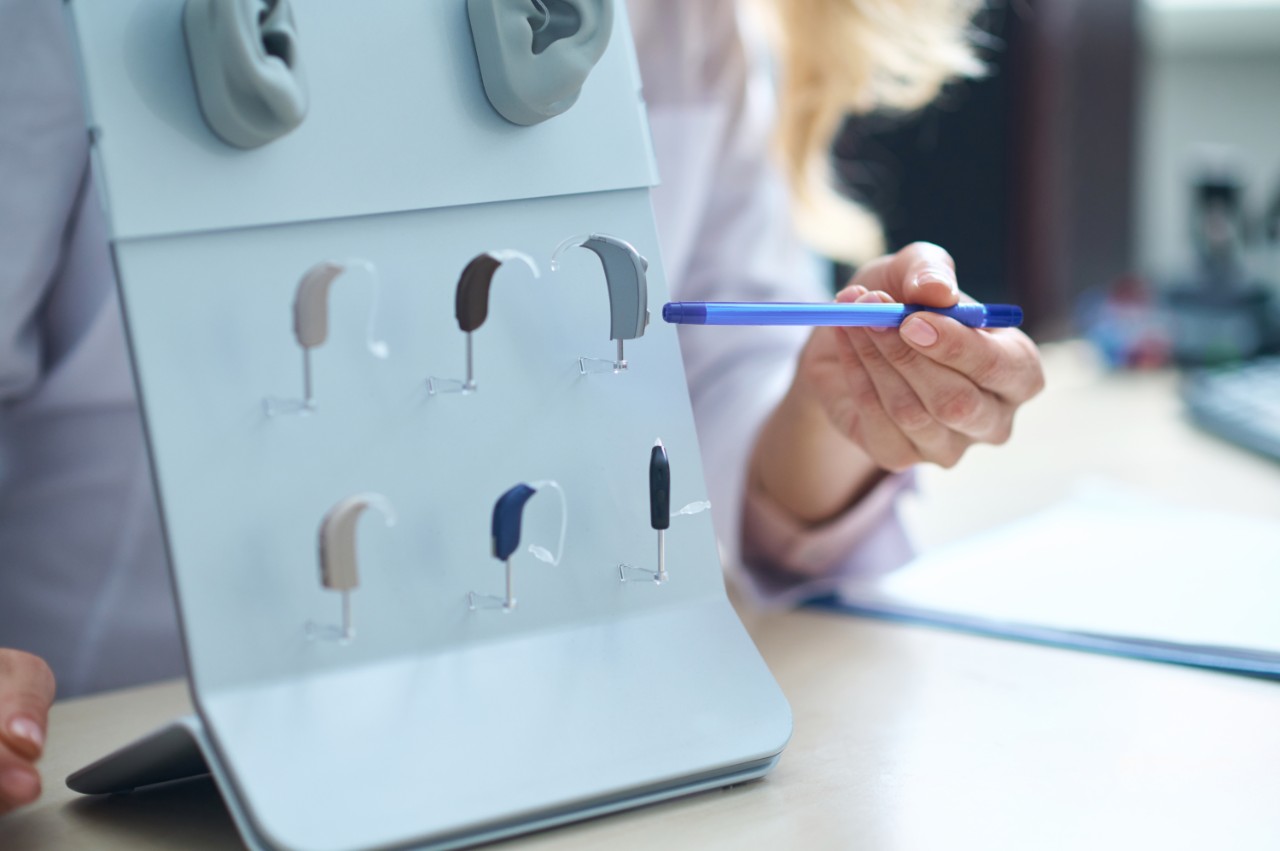
Audibel Arc AI hearing aids emphasise natural sound quality and include additional wellness-focused features. In addition to improving hearing, Arc AI offers fall detection and health monitoring capabilities, making it an ideal choice for users who want both auditory support and proactive health tracking. These hearing aids demonstrate the growing trend toward multifunctional devices that enhance both hearing and overall quality of life.
Doctor pointing with a pen at the different types of hearing aids

Find a store to try AI hearing aids near you

Visit our store today and discover the latest in hearing aids. Our experts are here to help you find the ideal pair that suits your needs and lifestyle. Don’t miss the chance to improve your hearing and boost your confidence in every situation.

AI hearing aids comparison

Model

Best for

Features

Phonak Sphere Infinio

Speech in noise

Bluetooth: ✅ · Health tracking: ❌ · Rechargeable: ✅

Oticon Intent

Natural listening

Bluetooth: ✅ · Health tracking: ❌ · Rechargeable: ✅

Starkey Genesis AI

Wellness features

Bluetooth: ✅ · Health tracking: ✅ · Rechargeable: ✅

Widex Allure

Music lovers

Bluetooth: ✅ · Health tracking: ❌ · Rechargeable: ✅

Signia Pure Charge&Go IX

Own voice comfort

Bluetooth: ✅ · Health tracking: ❌ · Rechargeable: ✅

ReSound NEXIA

Connectivity

Bluetooth: ✅ · Health tracking: ❌ · Rechargeable: ✅

Prices of AI hearing aids

The price of AI hearing aids varies significantly depending on brand, features, and level of personalisation. Understanding the price tiers helps match devices to both hearing needs and budget.

High-end AI hearing aids ($2,500–$6,000+ per pair)

High-end models from top brands like Phonak, Oticon, Starkey, Widex, and Signia generally range from $2,500 to $6,000+ per pair. These reflect advanced features such as automatic sound adjustment, AI-powered noise reduction, health tracking, Bluetooth connectivity, and premium fitting services. Prices in the audiology channel typically include professional fitting, programming, multiple follow-up appointments, and a warranty period.

Mid-range AI hearing aids ($1,500–$2,500 per pair)

Mid-range options offer good sound quality with fewer premium features. Specsavers Advance Elite (~$3,495–$4,495), Costco AI hearing aids (Kirkland Signature, ~$1,500–$2,000), and some independent audiologist-fitted devices fall in this range. Mid-range AI hearing aids still offer core AI features — automatic environment classification, Bluetooth streaming, rechargeable batteries — but may have fewer processing channels and less sophisticated AI algorithms than premium models.

Affordable and OTC AI hearing aids (under $1,500)

Over-the-counter (OTC) AI hearing aids such as the Jabra Enhance Plus, Elehear Beyond AI, and Fortell AI are available for under $1,500 without a prescription. These are best suited for mild to moderate hearing loss. They typically provide basic AI amplification and limited environmental adaptation compared to audiologist-fitted devices. Costco AI hearing aids (Kirkland Signature, manufactured by Sonova/Phonak) offer significant savings — often 50–60% less than audiologist-channel equivalents.

AI hearing aids cost: Hearing Services Program

Eligible Australians — including pensioners holding a Pensioner Concession Card, DVA card, or equivalent — can access subsidised or fully funded hearing aids through the Australian Government Hearing Services Program (HSP). Under the HSP, a range of devices is fully subsidised at no cost to the eligible wearer. Premium tiers above the subsidy level require a co-payment that varies by provider and device. Major providers including Specsavers, Amplifon, and independent audiologists all participate in the HSP.

Advantages and disadvantages

Advantages

Disadvantages

Notes

Better speech understanding

Higher cost

Improves clarity in noisy environments

Automatic adaptation

More complex technology

Adjusts to different listening situations in real time

Less listening fatigue

Learning curve

Reduces effort needed to follow conversations

Bluetooth connectivity

Potentially shorter battery life

Enables streaming from phones and devices

Health monitoring

Premium models can be expensive

Adds features like activity and wellness tracking

FAQs about AI hearing aids

The price of AI hearing aids varies significantly depending on brand, features, and level of personalisation. Understanding the price tiers helps match devices to both hearing needs and budget.

What are the disadvantages of AI hearing aids?

The most significant disadvantage is cost — considerably higher than traditional hearing aids. AI hearing aids can also be more complex to use, especially for older users less comfortable with technology. Battery life may be shorter in models with extensive connectivity and processing. Some users find that constant automatic adjustments take time to get used to. Repairs and software updates can be more expensive and may require specialised support.

Does Costco have AI hearing aids?

Yes. Costco offers AI hearing aids through its hearing aid centres in Australia, including Kirkland Signature models manufactured by Sonova (Phonak's parent company). These incorporate adaptive sound technology and noise reduction at significantly lower prices than audiologist-channel equivalents — often 50–60% less. However, specific AI features may vary by location and brand. Costco's fitting service and follow-up care model differs from independent audiologists.

What are the best AI hearing aids in 2026?

Consistently high-rated options in 2026 include the Starkey Genesis AI 24, Phonak Sphere Infinio, Oticon Intent, Widex Allure, and Signia Pure Charge&Go IX. The 'best' depends on hearing profile, lifestyle, and budget. For premium noise performance: Phonak Sphere Infinio. For health tracking: Starkey Genesis AI 24. For natural sound quality: Widex Allure. For own voice processing: Signia Pure Charge&Go IX. For adaptive listening intentions: Oticon Intent.

Will AI improve hearing aids further?

Yes. The future of hearing aid technology includes: on-device large language models for contextual awareness (beyond scene classification); neural interface connectivity for direct cochlear stimulation; AI-powered audiological assessment reducing the need for formal audiometric testing; expanded OTC access following international regulatory changes; and AI glasses with integrated hearing aids (already appearing from Meta and others). As chip efficiency improves and neural network architectures are refined, the gap between AI and traditional hearing aid performance in difficult situations will continue to widen.

With you on your journey to better hearing.

Please use a valid US zipcode.

Please use a valid postcode.

Thank you for submitting your request

We will get in touch with you as soon as possible.

FAQs on rechargeable hearing aids

What styles of rechargeables are available?

At present, only behind-the-ear (BTE) and receiver-in-canal (RIC) hearing aids support rechargeable batteries. Smaller hearing aids, such as in-the-ear (ITE) and invisible hearing aids, are too small to use rechargeable batteries, as recyclable technology has not advanced to the point where the tiny batteries used in smaller hearing aid styles can hold a full day’s charge. If you want smaller hearing aids, you may have to settle for disposable hearing aid batteries at the moment, although as battery technology improves that limitation may change.

How long do rechargeable batteries last?

Fully charged, rechargeable batteries provide 24 to 30 hours of use, even when the user listens to streaming audio for half the day. On average, it takes three hours to fully charge rechargeable hearing aids, and you can get six hours of use out of a 30-minute charge.

Rechargeable hearing aid battery lifespan depends on the type of battery used. Lithium ion hearing aid batteries are the same type of battery used in cell phones and other portable electronics. They are sealed in the hearing aid case and have a lifespan of five years, after which they need to be replaced by a licensed hearing professional.

Silver-zinc rechargeable batteries are the same size as disposable zinc-oxygen button batteries. Unlike lithium-ion batteries they can be removed from the hearing aid, making replacement easier. Silver-zinc batteries provide as many hours of use as lithium-ion batteries and have a lifespan of approximately one year. Both types of rechargeable batteries are recyclable.

Can I replace disposable ones with rechargeables?

It’s best to only use rechargeable batteries with hearing aids specifically designed for rechargeable batteries. It may be possible to use silver-zinc rechargeable batteries in an existing hearing aid, but you would need to purchase a compatible charging port and there’s no guarantee the hearing aid would work properly. 

Are recyclable aids better for the environment?

Recyclable batteries are absolutely better for the environment. A lithium-ion battery provides up to five years of use. Presuming a hearing aid with disposable batteries used 675 batteries (the longest lasting hearing aid batteries), with each battery lasting 14 days, you'll use 120 disposable batteries over the course of five years.

Are recyclable hearing aids expensive?

Rechargeable hearing aids are no more expensive than disposable battery hearing aids with similar features. You will, however, need to purchase a charging station, which can cost $200 to $300. Silver-zinc rechargeable batteries cost $25 to $50 to replace every year, which compares well with the $30 to $150 a year you’d spend on disposable batteries.

Lithium-ion batteries cost up to $200 to replace, but as they only need replacing every five years, they’re still cheaper than five years of disposable battery purchases. 

How do I care for rechargeable hearing aids?

The care and cleaning of rechargeable hearing aids is no different than for hearing aids with disposable batteries. Caring for the batteries, however, is a bit different. Whether your hearing aid uses lithium-ion or silver-zinc batteries, always place the hearing aids on the charger when not in use. Frequent charging will not reduce battery life.

If your hearing aid uses silver-zinc batteries, do not open the battery door when you’re not using the hearing aid except for in the following situation. If you are not going to use hearing aids for three or more hours and do not have access to the charging station, remove the batteries and store in a location where they do not touch each other or any other metal objects.

If you are not going to use lithium-ion rechargeable hearing aids for several hours and do not have access to the hearing aid charging port, turn the hearing aids off and store in a safe location.

No matter what type of batteries power your rechargeable hearing aids, keeping the hearing aids dry and away from extreme temperatures maximizes battery life. 

The content of this page or of an article contained therein may refer/be applicable to a specific territory different from your country of residence.

Learn more on hearing aids technology

Schedule a free hearing aid consultation