Congenital hearing loss and its treatments

Congenital hearing loss is a kind of deafness present at birth or developing shortly after, affecting between 0.5 and 5 in every 1,000 newborns worldwide - with rates varying significantly between high-income and lower-income countries. It is one of the most common congenital conditions globally.
Among the different types of hearing loss, the congenital form requires particularly early identification and intervention to support speech, language and cognitive development.
What is congenital hearing loss?
Congenital hearing loss is one of the types of hearing loss, particularly present at or around birth. The most common form is sensorineural, caused by damage to the inner ear or auditory nerve, which is typically permanent. Less commonly, it can be conductive, where a structural problem in the outer or middle ear prevents sound from being transmitted efficiently, or mixed, combining both.
The timing of onset matters significantly for development: hearing loss present before speech and language are established - known as prelingual - has the greatest impact on communication development if not identified and managed early.
When it occurs during language acquisition (perilingual) or after language is established (postlingual), the developmental implications differ, but early intervention remains important in all cases.
Signs of congenital hearing loss
Newborns and infants cannot communicate hearing difficulties directly, so recognising the signs early depends on careful observation. Common indicators include:
- Not startling at loud sounds
- Not turning towards voices or sounds by 3–4 months
- Not babbling by 6 months
- Not responding to their name by 12 months
- Delayed speech and language development
- Seeming inattentive or easily distracted
In older children, signs may include difficulty following instructions, consistently turning up the volume on devices, or performing better in quiet environments than noisy ones. If any of these signs are present, a hearing assessment should be arranged promptly.

Causes of deafness: congenital hearing loss
Congenital hearing loss has two broad categories of causes: genetic and non-genetic.
Genetic causes
Approximately 50–60% of congenital hearing loss is genetic in origin.
The most common form is autosomal recessive - where both parents carry a copy of the affected gene without necessarily being affected themselves. Mutations in the GJB2 gene (connexin 26) are the most frequently identified cause of congenital sensorineural hearing loss.
Other genetic patterns include autosomal dominant, X-linked and mitochondrial inheritance.
Importantly, genetic hearing loss is not always present at birth in its full form: some cases are progressive, with hearing deteriorating gradually over months or years.
Non-genetic causes
Non-genetic congenital hearing loss accounts for approximately 35-40% of cases and includes:
- Prenatal infections: cytomegalovirus (CMV) is the most common non-genetic cause; others include rubella, toxoplasmosis and herpes
- Premature birth and low birth weight: associated with increased risk of sensorineural hearing loss
- Hypoxia at birth: oxygen deprivation during labour can damage the auditory system
- Ototoxic medications during pregnancy: certain drugs taken during pregnancy can affect fetal hearing development
- Severe neonatal jaundice: if untreated, can cause auditory nerve damage.
In a small proportion of cases, no identifiable cause is found despite thorough investigation.
Diagnosis and newborn hearing screening
In Australia, newborn hearing screening is offered to all babies through the Universal Newborn Hearing Screening program, using two methods:
- Automated Auditory Brainstem Response (AABR): measures how the auditory nerve and brainstem respond to sound
- Otoacoustic Emissions (OAE): detects sounds produced by the inner ear in response to a stimulus
A failed screening does not confirm hearing loss but triggers a referral for a full diagnostic audiological assessment. Early diagnosis - ideally before three months of age - and intervention before six months significantly improve outcomes for speech and language development.
Treatment & management of congenital hearing loss
There is no single treatment for congenital hearing loss; the approach depends on the type, degree and cause:
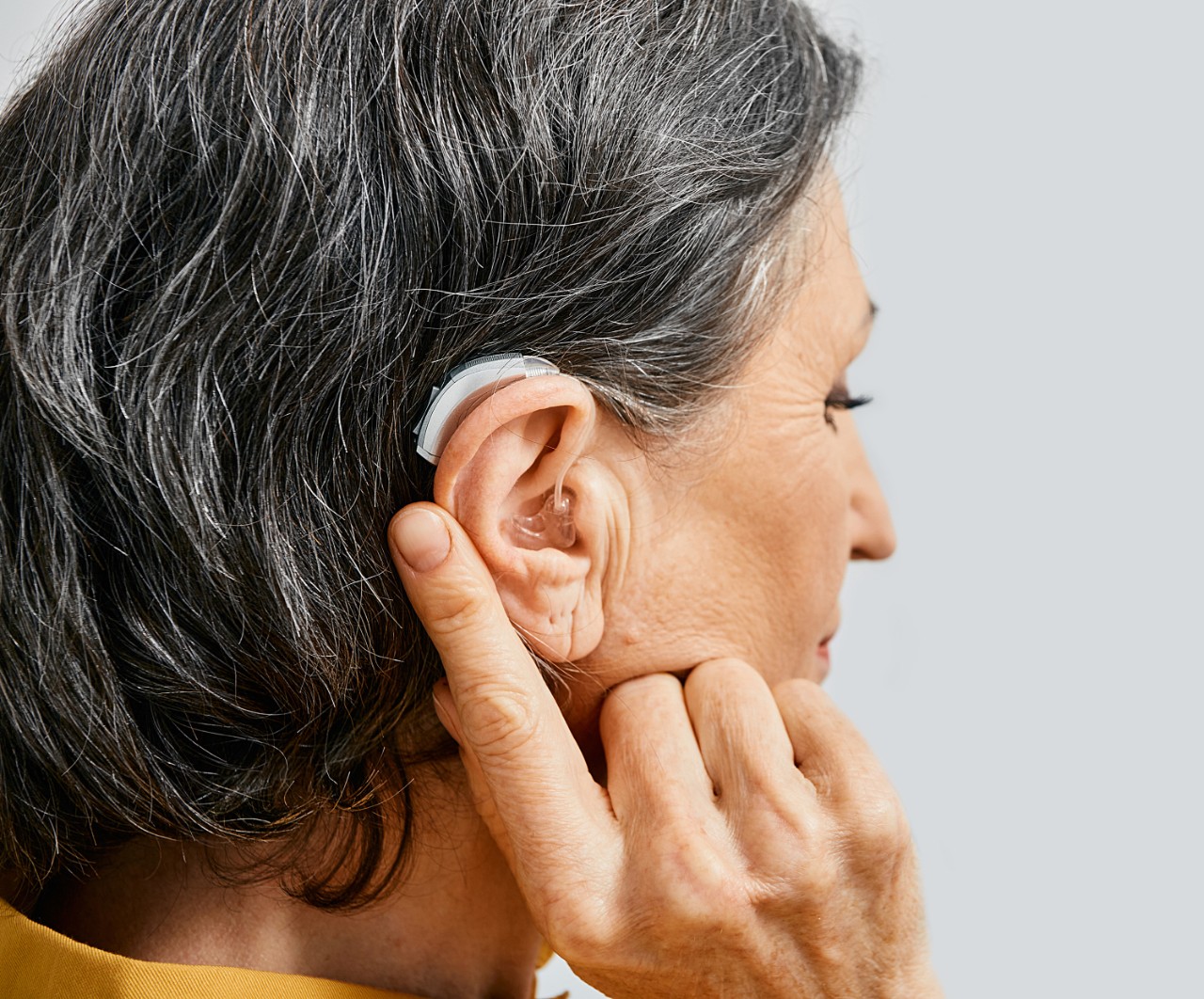
- Hearing aids: suitable for mild to severe hearing loss; available in very small sizes appropriate for infants
- Cochlear implants: recommended for severe to profound sensorineural hearing loss where hearing aids provide limited benefit; early implantation before 12 months is associated with significantly better language outcomes
- Bone-anchored hearing aids (BAHA): an option for conductive hearing loss or single-sided deafness
- Speech and language therapy: essential alongside any device-based intervention
- Early intervention programmes: in Australia, eligible children can access support through the Hearing Services Program and NDIS.
FAQs about congenital hearing loss
Is deaf hereditary?
Congenital vs acquired: what's the difference?
Congenital hearing loss is present at or around birth, frequently genetic in origin, and typically affects prelingual development if not identified early. Acquired hearing loss develops after birth as a result of illness, noise exposure, ageing or trauma.
The distinction matters because the interventions, support systems and educational approaches differ significantly between the two.
Can congenital hearing loss be progressive?