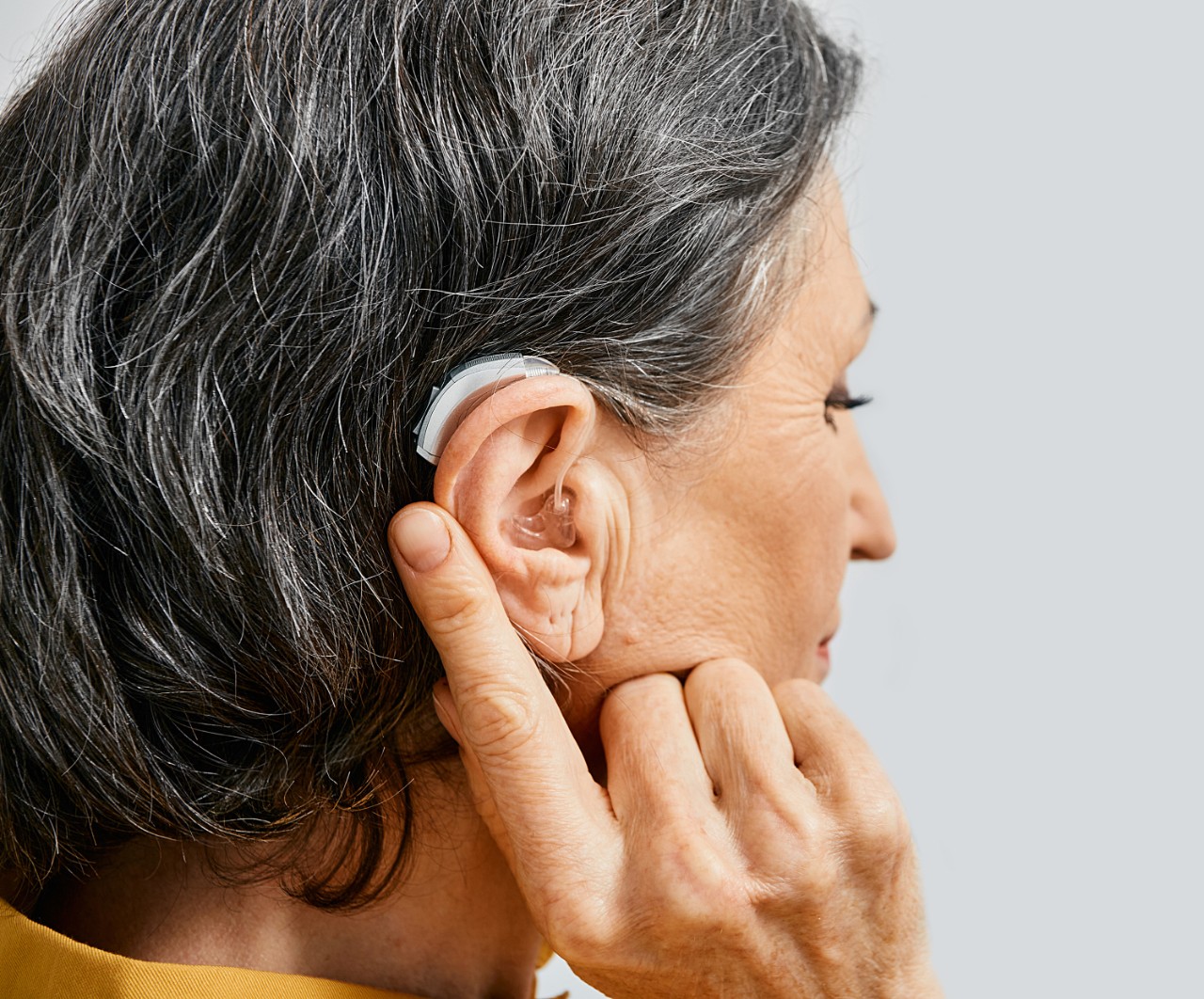
Hearing Aid vs Hearing Amplifier: key differences
900 million
By 2050, the WHO predicts that 900 million people worldwide will experience hearing loss.
By 2050, the World Health Organization predicts that 900 million people worldwide will experience some degree of hearing loss.
As awareness grows, so does the market for hearing devices — and with it, a common confusion between hearing aids and hearing amplifiers. While they may look similar, they serve very different purposes and are designed for very different people.
Hearing aids versus hearing amplifiers
Both hearing devices make sounds louder, but that's where the similarities end:
- A hearing aid is a precision medical device individually programmed to treat a specific hearing loss profile;
- A hearing amplifier simply boosts all sounds indiscriminately, without any clinical fitting or customisation.
Choosing the wrong device can delay diagnosis and prevent you from accessing the treatment your hearing actually needs.
What is a Hearing Aid?
Hearing aids are precision medical devices designed for people with a diagnosed hearing loss. Unlike amplifiers, they don't just make everything louder — they process sound selectively, targeting the frequencies you struggle with most. Key features include:
- Professionally fitted and programmed by a licensed audiologist
- Customised to your specific hearing profile via an audiogram
- Selective amplification — boosts speech frequencies, reduces background noise
- Bluetooth connectivity and automatic environment adaptation on most modern models
- Tinnitus management features available on many devices
- Eligible for government subsidy through the OHS program in Australia
What is a Hearing Amplifier?
Hearing amplifiers — also called Personal Sound Amplification Products (PSAPs) — are designed for people with normal hearing who want to boost sounds in specific situations. They are not medical devices and are not regulated by the TGA. Key features include:
- No audiologist fitting required — available directly in stores or online
- Amplifies all sounds equally, without frequency-specific adjustment
- Suitable for occasional use: watching TV, birdwatching, childcare
- Not appropriate for people with hearing loss — can mask symptoms and delay diagnosis
- No government subsidy available in Australia
- Significantly lower cost than hearing aids — typically AU$50–$500

Difference between hearing aids and amplifiers
A summary table
Disclaimer: the following price information is sourced from third-party providers and may vary depending on hearing centre, location and individual circumstances.
|
Feature |
Hearing Aids |
Hearing Amplifiers |
|---|---|---|
|
Designed for |
People with diagnosed hearing loss |
People with normal hearing |
|
Require audiologist fitting |
Yes |
No |
|
Customised to hearing profile |
Yes (frequency-specific) |
No (amplify all sounds equally) |
|
Regulated as medical device (TGA) |
Yes |
No |
|
Treat hearing loss |
Yes |
No |
|
Government subsidy available |
Yes (check requirements) |
No |
|
Approximate cost in Australia |
$1.500-$9.000/pair |
$50-500 |
OTC hearing aids: a third option
For those who fall somewhere between needing a full hearing aid and simply wanting an amplifier, OTC hearing aids are worth knowing about.
They are designed for mild to moderate hearing loss, offer basic sound processing and self-fitting capability, and are available without an audiologist appointment. They sit above a basic amplifier in terms of sophistication, but below a professionally fitted hearing aid in terms of precision and personalisation.
In Australia, they are not yet a formally regulated category, so if you are considering one, look for TGA-registered devices and seek a basic hearing assessment first.
Are hearing amplifiers safe?
For people with normal hearing, hearing amplifiers are generally safe when used occasionally and at reasonable volume levels.
The risks arise when they are used as a substitute for a hearing aid:
- Delayed diagnosis: relying on an amplifier can mask the symptoms of hearing loss, allowing the underlying condition to go undetected and untreated
- Over-amplification: amplifying all sounds equally can cause listening fatigue and, over time, may contribute to further noise-induced damage
- No clinical follow-up: without an audiologist, there is no monitoring of how the device is affecting your hearing health
If you suspect you have hearing loss, a professional hearing assessment should always be the first step before purchasing any hearing device.
Signs you need a hearing aid
It's not always easy to know whether your hearing is within the normal range. If you experience any of the following, it's time to get your hearing tested with a licensed hearing care professional — and a hearing amplifier is unlikely to be the right solution:
- Sounds seem muffled or unclear;
- Struggling to follow conversations, especially in noisy environments;
- Frequently needing to turn up the TV volume;
- Difficulty hearing on the phone;
- Lip-reading to follow conversations;
- Avoiding social events because of difficulty hearing;
- Asking people to repeat themselves regularly.
FAQs about hearing aids vs hearing amplifiers
Do hearing aids just amplify sound?
Are hearing amplifiers any good?
Can amplifiers help mild hearing loss?